
A root canal is one of the most effective dental procedures for saving a damaged or infected tooth. While the treatment itself helps eliminate infection and relieve pain, proper aftercare plays a crucial role in ensuring a smooth recovery. One of the most common concerns patients have following the procedure is what to eat after root canal treatment. Choosing the right foods can help minimize discomfort, protect the treated tooth, and promote faster healing.
Many patients experience mild sensitivity or tenderness after the procedure, making it important to follow a soft and nutritious diet for the first few days. Understanding what to eat after root canal therapy can help prevent unnecessary pressure on the treated tooth while providing your body with the nutrients needed for recovery. This guide from Denticare Dental & Implant Clinic explains the best foods to eat, foods to avoid, and essential aftercare tips to help you recover comfortably.
Understanding Root Canal Treatment
A root canal treatment is performed when the pulp inside a tooth becomes infected or severely damaged due to decay, cracks, or injury. During the procedure, the infected tissue is removed, the root canals are cleaned and disinfected, and the tooth is sealed to prevent future infection.
Although the procedure is designed to relieve pain, some patients may experience temporary sensitivity after treatment. This is why understanding what to eat after root canal procedures is an important part of post-treatment care. Proper nutrition not only supports healing but also reduces the risk of damaging the temporary filling or treated tooth.
Why Your Diet Matters After a Root Canal
The foods you consume immediately after treatment can significantly affect your recovery. Eating hard, sticky, or crunchy foods too soon may cause discomfort or place excessive pressure on the treated area. On the other hand, soft and nutrient-rich foods can support tissue healing and reduce irritation.
Patients often ask, can i eat after a root canal immediately following the procedure. The answer depends on whether the anesthesia has completely worn off. It is generally recommended to wait until numbness subsides before eating to avoid accidentally biting your tongue, lips, or cheeks.
Following a dentist-recommended diet helps:
- Protect the treated tooth
- Reduce sensitivity and discomfort
- Prevent damage to temporary restorations
- Promote faster healing
- Lower the risk of complications
When Can You Eat After a Root Canal?
One of the most frequently asked questions is can i eat after a root canal on the same day. Most dentists recommend waiting until the local anesthesia has completely worn off, which usually takes a few hours. Eating while your mouth is numb can increase the risk of accidental injury.
Once sensation returns, you can begin with soft foods that require minimal chewing. It is also advisable to avoid chewing directly on the treated side of your mouth until your dentist confirms that the tooth has healed adequately.
Understanding what to eat after root canal treatment during the first few days can make a significant difference in your comfort and recovery experience.
Best Foods to Eat After a Root Canal
If you are wondering what to eat after root canal therapy, the key is to choose foods that are soft, easy to chew, and rich in nutrients.
- Yogurt: Yogurt is one of the best options after a root canal because it is soft, soothing, and packed with protein and probiotics. It requires no chewing and can be comfortably consumed even if the treated area is sensitive.
- Smoothies: Smoothies provide essential vitamins and minerals while being gentle on the teeth. Blend fruits with yogurt or milk for a nutritious meal. It is best to drink smoothies directly from a glass, as using a straw may cause unnecessary discomfort during recovery.
- Mashed Potatoes: Mashed potatoes are soft, filling, and easy to eat. They provide energy and comfort while requiring minimal chewing effort.
- Oatmeal: Warm oatmeal is a healthy option rich in fiber and nutrients. Ensure it is not too hot, as extreme temperatures may trigger sensitivity.
- Scrambled Eggs: Eggs are an excellent source of protein and are soft enough to eat comfortably after treatment.
- Applesauce: Applesauce offers vitamins and natural sweetness without requiring any chewing. It is particularly suitable during the first day of recovery.
- Cottage Cheese: Soft dairy products such as cottage cheese provide protein and calcium while remaining gentle on sensitive teeth.
- Soups: Lukewarm soups can be nutritious and soothing. Pureed vegetable soups and broth-based soups are excellent choices for patients recovering from root canal treatment.
Nutrient-Rich Foods That Support Healing
Patients often search for after root canal treatment what to eat to speed up recovery. The answer lies in selecting foods rich in vitamins, minerals, and protein.
Protein-Rich Foods
Protein supports tissue repair and healing. Good options include:
- Eggs
- Soft fish
- Tofu
- Yogurt
- Cottage cheese
Vitamin C Sources
Vitamin C helps support gum health and tissue repair. Soft fruits such as bananas, ripe papaya, and blended berries are ideal choices.
Healthy Fats
Healthy fats contribute to overall healing and wellness. Avocados are particularly beneficial because they are nutritious and easy to eat.
Soft Vegetables
Cooked vegetables provide essential nutrients while being gentle on the mouth. Steamed carrots, squash, and sweet potatoes are excellent options.
When considering after root canal treatment what to eat, focus on balanced meals that combine protein, healthy fats, and vitamins.
Sample Meal Plan After a Root Canal
Breakfast
- Oatmeal with mashed banana
- Yogurt with soft fruit
- Scrambled eggs
Mid-Morning Snack
- Applesauce
- Smoothie
Lunch
- Vegetable soup
- Mashed potatoes
- Soft fish
Afternoon Snack
- Cottage cheese
- Ripe avocado
Dinner
- Soft rice
- Steamed vegetables
- Tender chicken or tofu
Following a meal plan like this helps patients understand what to eat after root canal procedures while maintaining proper nutrition.
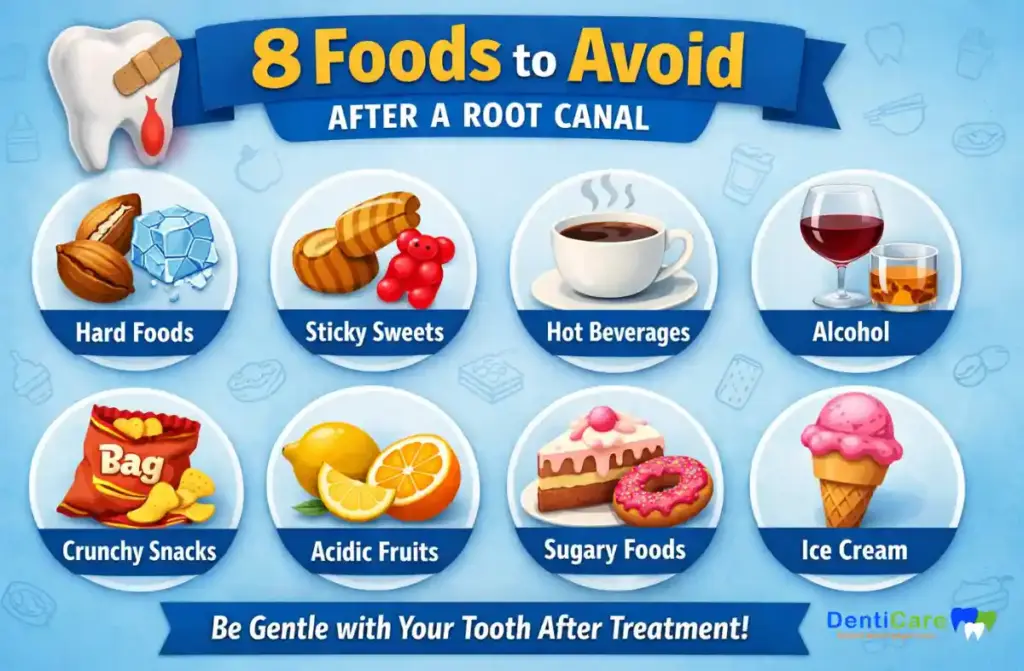
Foods and Drinks to Avoid
Knowing what not to eat is equally important.
Hard Foods
Avoid foods such as:
- Nuts
- Ice cubes
- Hard candies
These foods can crack or damage the treated tooth.
Crunchy Foods
Crunchy foods may irritate the area and create pressure on the healing tooth. Avoid:
- Chips
- Popcorn
- Crackers
Sticky Foods
Sticky foods can pull on temporary restorations and should be avoided. Examples include:
- Caramel
- Toffee
- Chewing gum
Extremely Hot or Cold Foods
Some patients experience temperature sensitivity. Limiting very hot or cold foods can reduce discomfort.
Sugary Foods and Drinks
Excess sugar can contribute to bacterial growth and should be consumed in moderation.
Can You Eat Without a Crown After a Root Canal?
A common concern among patients is can you eat after a root canal without crown placement. In many cases, a tooth remains functional after treatment, but it may be more fragile until a permanent crown is placed.
The answer to can you eat after a root canal without crown placement is yes, but caution is necessary. Stick to soft foods and avoid chewing hard items on the treated side. Following your dentist’s recommendations can help prevent fractures and ensure long-term success.
What to Eat During Different Stages of Recovery
Day One
Focus on liquids and soft foods:
- Smoothies
- Yogurt
- Soups
- Applesauce
This is the most sensitive period, making it important to understand what to eat after root canal procedures during the first 24 hours.
Days Two to Three
As discomfort decreases, gradually introduce:
- Scrambled eggs
- Oatmeal
- Mashed vegetables
- Soft pasta
Days Four to Seven
You can slowly return to more solid foods if chewing is comfortable. Continue avoiding hard and crunchy items.
After One Week
Most patients can resume a normal diet unless otherwise advised by their dentist.
What to Eat After RCT for Faster Recovery
Many patients specifically search for what to eat after rct because they want to recover quickly and comfortably. Soft foods rich in protein and vitamins are the best choices.
Examples include:
- Greek yogurt
- Soft fruits
- Mashed sweet potatoes
- Steamed vegetables
- Eggs
Following a balanced diet is one of the simplest ways to support healing. If you are unsure what to eat after rct, consult your dentist for personalized recommendations.
Managing Sensitivity After Treatment
Mild sensitivity after a root canal is normal and usually subsides within a few days. During this time, continue choosing foods that are easy to chew and avoid extreme temperatures.
Patients often ask after root canal what to eat when sensitivity persists. Soft foods, soups, yogurt, and cooked vegetables remain ideal choices until discomfort improves. Understanding after root canal what to eat can help minimize irritation and make recovery more comfortable.
Additional Aftercare Tips
Besides knowing what to eat after root canal treatment, following these aftercare guidelines can improve healing:
- Take prescribed medications as directed.
- Brush and floss gently around the treated area.
- Avoid smoking and alcohol during recovery.
- Stay hydrated throughout the day.
- Attend all follow-up appointments.
- Avoid chewing directly on the treated tooth until cleared by your dentist.
These simple measures help protect the treated tooth and promote successful healing.
When to Contact Your Dentist
While mild discomfort is expected, contact your dentist if you experience:
- Severe or worsening pain
- Persistent swelling
- Fever
- Allergic reactions to medication
- A loose temporary filling
- Difficulty chewing after several days
Prompt evaluation can help address potential complications before they become serious.
Conclusion
Understanding what to eat after root canal treatment is an essential part of ensuring a smooth and comfortable recovery. Choosing soft, nutritious foods can help protect the treated tooth, reduce discomfort, and support healing. From yogurt and smoothies to mashed vegetables and soups, the right diet can make a significant difference in your recovery experience.
If you have questions about what to eat after root canal procedures or need personalized aftercare guidance, the experienced team at Denticare Dental & Implant Clinic is here to help. Following your dentist’s recommendations and maintaining good oral hygiene will help ensure long-term success and keep your smile healthy for years to come.
Read also Are Dental Implants Painful.