Your Mouth Says More About Your Health Than You Realize
Most people think dental hygiene is only about having white teeth or fresh breath.
But oral health goes far beyond appearance.
The importance of dental hygiene extends to every aspect of your well-being. Your mouth is closely connected to your overall health, comfort, confidence, nutrition, communication, and everyday quality of life. Poor dental hygiene can contribute to cavities, gum disease, infections, tooth loss, bad breath, and other complications that may affect both physical and emotional well-being.
Many people do not think much about oral care until pain suddenly interrupts daily life. A small cavity becomes severe tooth pain. Bleeding gums slowly turn into sensitivity and discomfort. For some people, it begins quietly — avoiding cold drinks, chewing on one side of the mouth, or covering their smile while laughing — until the discomfort becomes impossible to ignore.
Something as simple as eating comfortably, sleeping peacefully, or smiling confidently can suddenly become difficult.
The good news is that most dental problems are largely preventable.
Simple daily habits practiced consistently can protect your teeth and gums for years while helping you avoid painful and expensive dental treatments later.
According to the World Health Organization, oral diseases affect nearly 3.5 billion people worldwide, making oral health one of the most common health concerns globally.
Understanding the importance of dental hygiene helps people make smarter decisions about their long-term health and well-being.
A healthy smile is not only about appearance — it is about comfort, confidence, self-esteem, and quality of life.
How Dental Hygiene Has Changed Over Time
Dental hygiene has evolved dramatically throughout history.
In ancient civilizations, people cleaned their teeth using chewing sticks, crushed charcoal, herbs, salt mixtures, and rough natural materials. Early forms of oral care existed in places like Egypt, India, China, and Greece long before modern dentistry developed.
However, people in earlier times had limited understanding of bacteria, plaque buildup, gum disease, and preventive dental care. Tooth pain was often treated only after severe damage had already occurred, and many dental procedures were extremely painful and unsafe compared to modern standards.
For centuries, losing teeth at a young age was common. Poor nutrition, lack of hygiene awareness, tobacco use, and the absence of professional dental care contributed to widespread oral health problems.
Over time, scientific discoveries completely transformed dental hygiene.
The development of toothbrushes, fluoride toothpaste, dental floss, sterilized instruments, X-rays, anesthesia, and preventive dentistry helped make oral care safer, more effective, and more accessible.
Today, modern dental hygiene focuses not only on treating problems but also on preventing them before they become serious. Dentists now understand the strong connection between oral health and overall wellness, leading to better education, earlier diagnosis, and improved long-term care.
Modern technology has also improved patient comfort through advanced cleaning tools, cosmetic dentistry, invisible aligners, digital imaging, and minimally invasive treatments.
Despite these advances, one important truth has remained the same throughout history:
Consistent daily habits are still the foundation of a healthy smile.
Simple practices like brushing, flossing, healthy eating, hydration, and regular dental visits continue to play one of the biggest roles in protecting long-term oral health.
What is Dental Hygiene?
Dental hygiene refers to the daily habits and professional care that help keep the teeth, gums, tongue, and mouth healthy and clean.
It includes:
- Brushing properly to remove plaque and bacteria
- Flossing to clean between teeth
- Cleaning the tongue to reduce odor-causing bacteria
- Visiting the dentist regularly
- Eating foods that support healthy teeth and gums
- Preventing plaque and tartar buildup
When practiced consistently, these habits help reduce the risk of cavities, gum disease, enamel erosion, and long-term oral complications.
Why Many People Neglect Oral Care
Even though most people understand oral hygiene is important, it is often ignored until pain appears.
Common reasons include:
- Busy schedules and inconsistent routines
- Fear or anxiety about dental visits
- Assuming there is no problem without pain
- Lack of awareness about gum disease
- Concerns about treatment costs
- Underestimating the connection between oral health and overall health
Unfortunately, dental problems rarely disappear on their own.
What starts as a minor issue can slowly become more painful, complicated, and expensive over time.
Preventive dental care is almost always easier, safer, and less expensive than corrective treatment.
Why Dental Hygiene is So Important
Prevents Tooth Decay
One of the biggest benefits of good oral hygiene is cavity prevention.
When food particles remain on teeth, bacteria feed on sugars and produce acids that slowly weaken enamel. Over time, this can lead to cavities, infections, sensitivity, and severe pain.
Regular brushing and flossing help stop this process early and reduce the need for treatments like fillings, root canals, or extractions.
Protects Gum Health
Healthy gums are the foundation of strong teeth.
Poor oral hygiene can cause plaque buildup near the gum line, leading to inflammation and infection.
Warning signs may include:
- Bleeding gums
- Swelling and tenderness
- Gum recession
- Persistent bad breath
- Loose teeth in severe cases
Keeping gums healthy supports long-term oral stability, chewing comfort, and overall dental function.
Helps Prevent Bad Breath
Persistent bad breath is often caused by bacterial buildup inside the mouth.
Food particles trapped between teeth and on the tongue can create unpleasant odors over time.
Proper brushing, flossing, hydration, and tongue cleaning help keep the mouth cleaner and breath fresher.
Supports Overall Health
Research continues to show strong links between oral health and overall wellness.
Poor dental hygiene may be associated with:
- Diabetes-related complications
- Heart-related conditions
- Respiratory infections
- Pregnancy-related oral issues
A healthier mouth often supports a healthier body.
Improves Confidence and Everyday Comfort
A clean and healthy smile can affect how people feel about themselves.
When someone struggles with visible dental problems, bad breath, or pain, even simple interactions can feel uncomfortable. Some people begin hiding their smile, avoiding conversations, or feeling self-conscious in social and professional situations.
Over time, oral health problems can affect social confidence, emotional well-being, and even the willingness to participate comfortably in everyday life.
Healthy teeth and gums help people feel more comfortable speaking, laughing, eating, and smiling naturally.
Common Signs of Poor Dental Hygiene
Oral health problems often develop slowly and quietly.
Common warning signs include:
- Bleeding gums
- Persistent bad breath
- Yellow plaque buildup
- Tooth sensitivity
- Swollen gums
- Mouth sores
- Tooth pain
- Dry mouth
- Loose teeth
Ignoring these symptoms may allow dental problems to worsen over time.
When You Should See a Dentist Immediately
Some symptoms should never be ignored.
Seek professional dental care if you experience:
- Severe or persistent tooth pain
- Swelling in the gums or face
- Signs of infection or pus
- Loose adult teeth
- Bleeding that does not stop
- Difficulty chewing due to pain
- Sudden tooth sensitivity
- Broken or injured teeth
Early treatment often prevents more serious complications later.
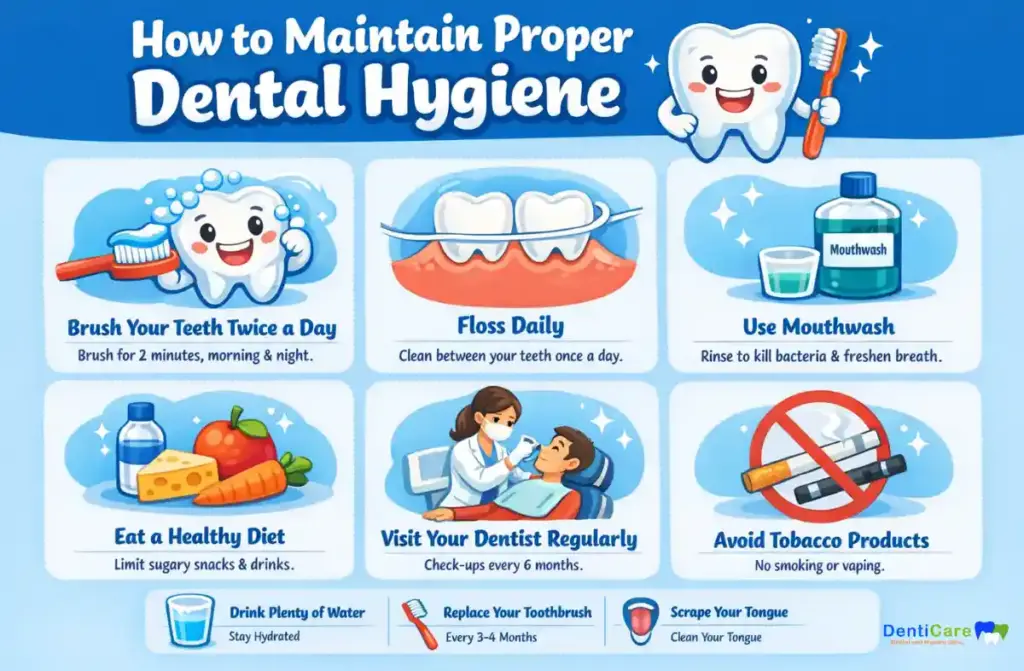
Daily Habits That Improve Dental Hygiene
Brush Twice Daily
Brush for at least two minutes using fluoride toothpaste.
Make sure to clean:
- Front and back teeth
- Along the gum line
- The tongue surface
Use a soft-bristled toothbrush to avoid damaging enamel and gums.
Floss Every Day
Flossing removes plaque and trapped food between teeth where toothbrushes cannot reach.
Skipping flossing leaves hidden bacteria behind that may contribute to cavities and gum disease.
Drink More Water
Water helps wash away food particles and supports saliva production, which naturally protects teeth from harmful acids.
Limit Sugary Foods and Drinks
Frequent sugar exposure increases the risk of tooth decay.
Soft drinks, candies, sugary snacks, and flavored beverages feed bacteria that weaken enamel.
Visit the Dentist Regularly
Professional cleanings remove hardened tartar that brushing alone cannot remove.
Routine checkups also help detect problems early before they become painful or expensive.
Foods That Support Healthy Teeth
Certain foods naturally support stronger teeth and healthier gums.
Examples include:
- Cheese and yogurt
- Leafy greens
- Apples and crunchy fruits
- Nuts and seeds
- Carrots and cucumbers
A balanced diet plays an important role in long-term oral health.
A Simple Daily Importance of Dental Hygiene Routine
Morning:
- Brush for two minutes
- Clean the tongue
- Drink water after breakfast
After Meals:
- Rinse with water
- Limit sugary snacks
Night:
- Floss thoroughly
- Brush before sleeping
- Avoid sleeping immediately after sugary drinks
Small habits repeated consistently often create the biggest long-term results.
Professional Cleaning vs Daily Brushing
Daily brushing and flossing are essential, but professional dental cleanings provide deeper care.
Brushing removes fresh plaque and food debris, while professional cleaning removes hardened tartar that cannot be removed at home.
Dentists also check for early signs of cavities, gum disease, infections, enamel wear, and other oral health concerns before they become severe.
Together, home care and professional care help protect long-term oral health.
Quick Tips for Better Dental Hygiene
- Replace your toothbrush every 3–4 months
- Avoid brushing too hard
- Clean your tongue daily
- Rinse after sugary foods and drinks
- Use fluoride toothpaste
- Drink water after coffee or tea
- Avoid smoking and tobacco products
- Don’t ignore bleeding gums
- Choose healthier snacks
- Schedule routine dental checkups
Myth vs Reality
Myth: “If my teeth don’t hurt, they’re healthy.”
Reality: Many dental problems develop silently in the early stages.
Myth: “Brushing alone is enough.”
Reality: Flossing is essential for cleaning between teeth.
Myth: “Bleeding gums are normal.”
Reality: Bleeding gums may be an early sign of gum disease.
Myth: “Sugar is the only cause of cavities.”
Reality: Poor oral hygiene, bacteria, acidic foods, and frequent snacking also contribute.
Fun Facts About Dental Hygiene
- Tooth enamel is the hardest substance in the human body
- Your mouth contains hundreds of types of bacteria
- Saliva naturally helps protect teeth from acids
- Ancient civilizations used chewing sticks for oral cleaning
- The average person spends around 38 days brushing their teeth over a lifetime
Dental Hygiene at Different Stages of Life
Children need guidance to build healthy habits early.
Teenagers may face challenges related to braces, sports, and diet choices.
Adults often deal with stress, smoking, coffee, and lifestyle habits that affect oral health.
Older adults may experience dry mouth, gum recession, tooth wear, and increased sensitivity.
At every age, consistent oral care supports comfort, nutrition, confidence, social ease, and overall wellness.
The Emotional Side of Oral Health
Dental problems affect more than physical health.
Pain, visible dental issues, or missing teeth can deeply affect confidence and emotional well-being. Many people become hesitant to smile, speak openly, or participate comfortably in social situations.
Something as simple as enjoying a meal, laughing with friends, or smiling in a photograph can become stressful when oral health problems are ignored.
Over time, these struggles may quietly affect self-esteem, communication, and daily happiness more than people realize.
Maintaining oral hygiene supports both physical and emotional quality of life.
The Long-Term Value of Prevention
One of the most important truths about dental hygiene is that prevention is easier than treatment.
Just a few minutes of daily care can help reduce the risk of:
- Cavities
- Gum disease
- Tooth loss
- Expensive dental procedures
- Chronic bad breath
- Oral infections
- Sensitivity and pain
Small daily habits may seem minor today, but their long-term impact can be life-changing.
Conclusion
The importance of dental hygiene goes far beyond keeping teeth clean.
Good oral care helps protect your smile, gums, comfort, confidence, overall health, and long-term quality of life. Daily habits like brushing, flossing, drinking water, eating balanced foods, and visiting the dentist regularly can prevent many common problems before they become serious.
A healthy smile is not just about appearance — it is part of living comfortably, confidently, and well.
The future of your smile is shaped by the habits you practice today. A few minutes of daily care can protect your smile, health, and confidence for years to come.
Read also Dental Crown Procedure.