
Medically Reviewed by Dr. Gnanaraj, BDS, MMC Chennai, PG Clinical Dentistry (Melbourne)
Principal Dentist, Denticare Dental & Implant Clinic
ASID Certified – Australian Society of Implant Dentistry
20+ years of clinical expertise in delivering advanced, patient-centered dental care
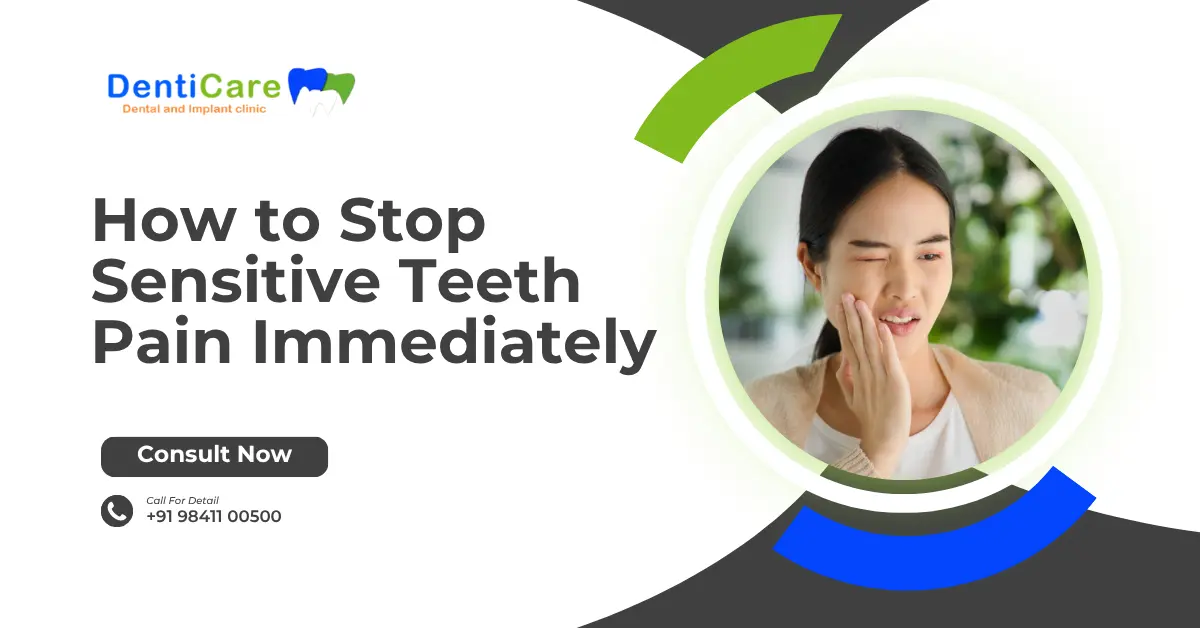
Tooth sensitivity is more than a minor inconvenience — it can quietly reshape how you eat, drink, and smile. That sudden, sharp pain when you sip hot tea, bite into ice cream, or breathe in cold air is your body’s way of telling you something needs attention. If you’re here, you’re probably looking for how to stop sensitive teeth pain immediately, because this kind of discomfort tends to show up without warning and rarely at a convenient time.
Sensitivity usually happens when the protective enamel layer wears down or the gums recede, exposing the dentin underneath. Dentin is packed with microscopic tubules that connect straight to the tooth’s nerve, which is why hot, cold, sweet, or even cold air can trigger a jolt of pain. At Denticare Dental & Implant Clinic in Chennai, we see this almost every week — patients who’ve started avoiding their morning coffee or their favourite dessert just to dodge the discomfort. This guide walks through what actually helps, both at home and in the dental chair, so you’re not stuck guessing.
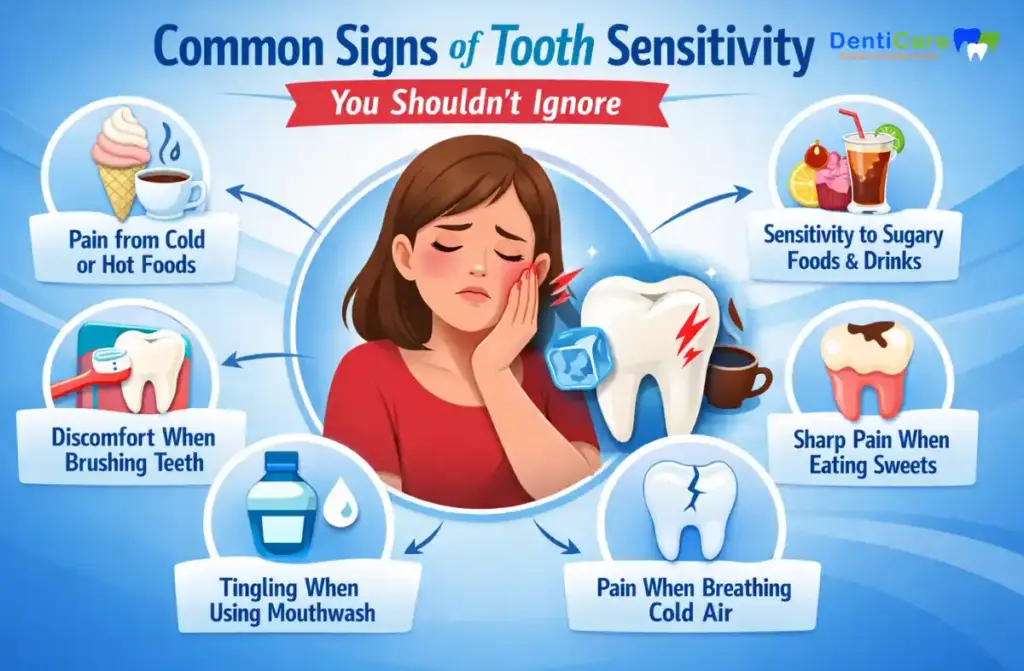
Common Signs of Tooth Sensitivity You Shouldn’t Ignore
Sensitivity rarely announces itself loudly at first. It tends to creep in, which is exactly why small signs are worth paying attention to before they turn into something bigger.
- Sharp, sudden pain while eating or drinking — especially with hot, cold, or sweet items
- Discomfort while brushing or flossing — often a sign of exposed dentin or gum recession
- A wince when breathing in cold air — even outdoor air can set it off in more advanced cases
- Pain that comes and goes vs. pain that lingers — occasional sensitivity is common, but persistent pain usually points to a deeper issue
If any of this sounds familiar and happens more than once in a while, it’s worth learning how to stop sensitive teeth pain immediately rather than waiting for it to pass on its own.
What Causes Tooth Sensitivity? Reasons for Sensitive Teeth
Before you can treat sensitivity effectively, it helps to know why it’s happening. There are several common reasons for sensitive teeth, and most of them fall into a handful of categories.
Enamel Erosion
Brushing too hard, or too often with a hard-bristled brush, gradually wears away enamel. Acidic foods and drinks — citrus fruit, sodas, energy drinks — speed this up further.
Gum Recession
When gums pull back from the tooth, they expose the root surface, which has no protective enamel at all. This is one of the most common causes we see in patients over 40.
Tooth Decay or Cavities
Cavities create a direct pathway to the nerve, so even small ones can cause noticeable sensitivity long before they become painful in other ways.
Teeth Grinding (Bruxism)
Grinding, often at night and without the person realising it, wears down enamel over months or years and is a frequent hidden cause of sensitivity.
Recent Dental Work
Whitening, professional cleaning, or a new filling can leave teeth temporarily sensitive for a few days as the tooth settles.
According to the American Dental Association, toothpaste containing potassium nitrate can help block the nerve signals responsible for this kind of pain — which is part of why desensitizing toothpaste is usually the first thing we recommend. Understanding which of these reasons applies to you is the real starting point for how to cure sensitive teeth rather than just masking the pain.
Quick Relief Tips: How to Stop Sensitive Teeth Pain Immediately at Home
Simple Remedies for Instant Comfort
When the pain hits and you need relief right now, these are the remedies our patients tell us actually work:
- Warm salt water rinse — reduces inflammation, keeps the mouth clean, and gently soothes irritated gums.
- Cold compress on the cheek — helps numb sharp, sudden pain and reduces any swelling.
- Desensitizing toothpaste — active ingredients block pain signals from reaching the nerve; effects build with regular use.
- Avoid extreme temperatures — stick to lukewarm foods and drinks until the sensitivity settles.
- Clove oil — a small dab on the affected area works as a natural numbing agent thanks to its eugenol content.
- Soft-bristled toothbrush — prevents further enamel wear while still cleaning effectively.
- Fluoride mouthwash — strengthens enamel over time and adds a layer of cavity protection.
- Diluted hydrogen peroxide rinse (occasional use only) — can help reduce bacteria, but shouldn’t become a daily habit.
- Sugar-free gum — chewing increases saliva flow, which naturally neutralizes acids in the mouth.
Used consistently, these give real sensitive teeth pain relief — though they work best as a bridge to proper treatment, not a permanent fix.
Natural Remedies That May Help Reduce Sensitivity
A few traditional remedies can complement your routine if you’re looking for gentler, at-home options for how to get rid of sensitive teeth:
- Turmeric paste — known for anti-inflammatory properties
- Neem sticks — a traditional oral care staple in Indian households
- Baking soda rinse — helps neutralize acids in the mouth
- Warm water with honey — soothes irritated soft tissue
- Aloe vera gel — supports healing and has mild antibacterial effects
These are genuinely useful support tools, but they work best alongside — not instead of — professional dental care.
Home Remedies vs. Professional Treatment: Which One Do You Need?
| Method | Speed of Relief | How Long It Lasts | Best For |
| Salt water rinse / cold compress | Minutes | Hours | Occasional, mild flare-ups |
| Desensitizing toothpaste | 1–2 weeks of regular use | Ongoing, with continued use | Mild to moderate everyday sensitivity |
| Fluoride treatment (in-clinic) | Same visit | Several months | Enamel weakening, early-stage sensitivity |
| Dental bonding | Same visit | 1–3 years | Exposed dentin, minor enamel loss |
| Gum therapy | 1–2 visits | Long-term | Gum recession-related sensitivity |
| Root canal therapy | 1–2 visits | Permanent (for that tooth) | Severe, persistent nerve pain |
If home remedies only take the edge off and the pain keeps coming back, that’s usually your sign to move to the next row on this table.
Do’s and Don’ts for Sensitive Teeth
Do:
- Switch to a soft-bristled brush and a gentle technique
- Rinse with plain water after acidic food or drinks
- Use desensitizing toothpaste daily, not just when pain flares up
- Book a dental check-up if sensitivity lasts more than a week
Don’t:
- Brush immediately after consuming something acidic — wait at least 30 minutes
- Ignore sensitivity that’s getting worse instead of better
- Rely on hydrogen peroxide rinses as a daily habit
- Assume over-the-counter toothpaste alone will fix a cavity or gum recession
Advanced Treatments for Sensitive Teeth at Denticare Dental & Implant Clinic
Home care can only go so far. When sensitivity doesn’t improve, or keeps returning, professional treatment is what actually resolves the underlying cause rather than just managing the symptom. At Denticare, here’s what we typically offer patients looking for how to stop sensitive teeth pain immediately and for good:
Fluoride Treatment
An in-office fluoride application reinforces weakened enamel and shields nerve endings — usually one of our first recommendations for early-stage sensitivity.
Dental Bonding
A tooth-coloured resin is applied over exposed dentin or root surfaces, sealing off the tubules that are triggering pain.
Gum Therapy
For sensitivity caused by gum recession, gum therapy protects exposed roots and can prevent the problem from progressing.
Laser Treatment
A modern, virtually painless option that seals dentinal tubules directly, often giving noticeable relief in a single sitting.
Root Canal Therapy
Reserved for severe or persistent nerve pain that hasn’t responded to anything else, root canal therapy removes the affected nerve tissue entirely.
In our experience, most patients notice a real difference within two to three visits when we combine an in-office desensitizing application with the right home-care routine — it’s rarely a one-step fix, but it also doesn’t need to drag on for months. We also tailor plans for patients specifically asking how to treat cold sensitive teeth, since cold-triggered pain often responds differently than sensitivity to sweets or pressure.
A note on cost: treatment cost varies depending on the cause and the option chosen — a fluoride application is generally the most affordable route, while root canal therapy is more involved. We’re happy to walk you through pricing and payment options during a consultation, so there are no surprises.
When Should You Visit a Dentist for Tooth Sensitivity?
Sometimes sensitivity is a sign of something that home care simply can’t fix. You should consult a dentist if you notice:
- Pain that persists for several days
- Severe discomfort while eating or drinking
- Swollen or bleeding gums
- You’re avoiding certain foods altogether because of the pain
Catching the cause early is what actually leads to lasting sensitive teeth pain relief — waiting it out usually just means a more involved (and more expensive) fix later.
Expert Tips to Prevent Tooth Sensitivity
Prevention is genuinely the best long-term strategy here. A few consistent habits go a long way toward how to reduce teeth sensitivity before it starts:
- Brush twice daily with a fluoride toothpaste
- Use gentle, circular brushing motions instead of aggressive back-and-forth scrubbing
- Cut back on acidic and sugary foods where you can
- Wear a night guard if you grind your teeth
- Book a routine dental check-up every six months
We also walk patients through how to remove sensitivity from teeth using a mix of preventive care and small daily adjustments — most of the time, it’s consistency rather than any single product that makes the difference.
Why Choose Denticare Dental & Implant Clinic?
Where you get treated matters just as much as the treatment itself. Here’s what patients consistently tell us they value:
- Experienced dental specialists, led by Dr. Gnanaraj Jayabal
- Modern diagnostic technology for accurate, targeted treatment
- A patient-first approach that prioritizes comfort over rushing through appointments
- Painless techniques, including laser and IV sedation options for anxious patients
- Treatment plans built around your specific cause, not a one-size-fits-all fix
If you’re still searching for how to stop sensitive teeth pain immediately, this is exactly the kind of case we handle regularly — and where a short consultation can save you months of avoidable discomfort.
Take Action Today — Get Immediate Relief
Tooth sensitivity doesn’t have to keep dictating what you eat or how you brush. If you’ve been searching for how to stop sensitive teeth pain immediately and want a plan that actually lasts, it’s worth stopping the guesswork and getting it properly diagnosed.
- Book your consultation at Denticare Dental & Implant Clinic
- Get an expert diagnosis and a treatment plan built around the actual cause
- Get back to eating, drinking, and smiling without hesitating first
Addressing sensitivity early almost always costs less — in time, money, and discomfort — than letting it progress.
Conclusion
Tooth sensitivity is common, but it’s rarely something you have to just live with. Between the right home-care habits and, when needed, a proper in-clinic treatment, most patients get lasting relief. Whether you’re exploring how to get rid of sensitive teeth on your own first or ready to see a specialist, Denticare Dental & Implant Clinic is here to help you get there.