


Medically Reviewed by Dr. Gnanaraj, BDS, MMC Chennai, PG Clinical Dentistry (Melbourne)
Principal Dentist, Denticare Dental & Implant Clinic
ASID Certified – Australian Society of Implant Dentistry
20+ years of clinical expertise in delivering advanced, patient-centered dental care
Seeing blood in saliva while spitting or brushing can be alarming, and it’s natural to worry that something serious is going on. In most cases, the cause is a treatable oral health issue — bleeding gums, gum disease, a minor mouth injury, or an infection. Still, bleeding that keeps coming back deserves attention, because it can occasionally point to a dental or medical condition that needs professional care.
The mouth is lined with delicate tissue and a dense network of small blood vessels, so it doesn’t take much irritation to cause bleeding. Poor oral hygiene, brushing too hard, gum inflammation, and dental infections are the most frequent causes. Less commonly, a throat infection or respiratory illness is the real source.
At Denticare Dental & Implant Clinic, patients with unexplained oral bleeding receive a thorough evaluation to pinpoint the exact cause and get a treatment plan built around their needs — not a generic one.
What Causes Blood to Mix With Saliva?
When blood mixes with saliva, a blood vessel somewhere in the mouth, gums, or throat has usually been disturbed. It can appear as faint pink streaks, small red spots, or, less often, a more noticeable amount of bright red blood.
Most of the time, the source is inflamed gum tissue. Gum disease is the single biggest cause, since infected gums bleed easily during brushing, flossing, or even chewing. Mouth ulcers, minor cuts from sharp food, and localized infections can also be responsible.
It’s common for people to first notice blood in saliva when they spit, particularly right after brushing or first thing in the morning. This pattern usually points to gum inflammation, overnight dryness, or bacterial buildup while you slept. If it keeps happening, it’s worth having a dentist take a look rather than waiting it out.
Common Symptoms That Come With Oral Bleeding
Symptoms vary depending on the underlying cause. Some people notice only a faint streak; others deal with visible swelling and discomfort as well.
Symptoms that often appear alongside oral bleeding include:
- Gums that bleed while brushing or flossing
- Swollen, tender, or receding gums
- Bad breath
- A metallic taste in the mouth
- Tooth sensitivity
- Mouth sores or ulcers
- Dry mouth
- Discomfort while chewing
- Redness along the gumline
- General irritation inside the mouth
When someone reports blood in saliva without cough, the cause is nearly always dental rather than respiratory — usually gum disease or localized irritation. In these cases, a dental visit is the right first step, rather than assuming it’s related to a cold or chest infection.
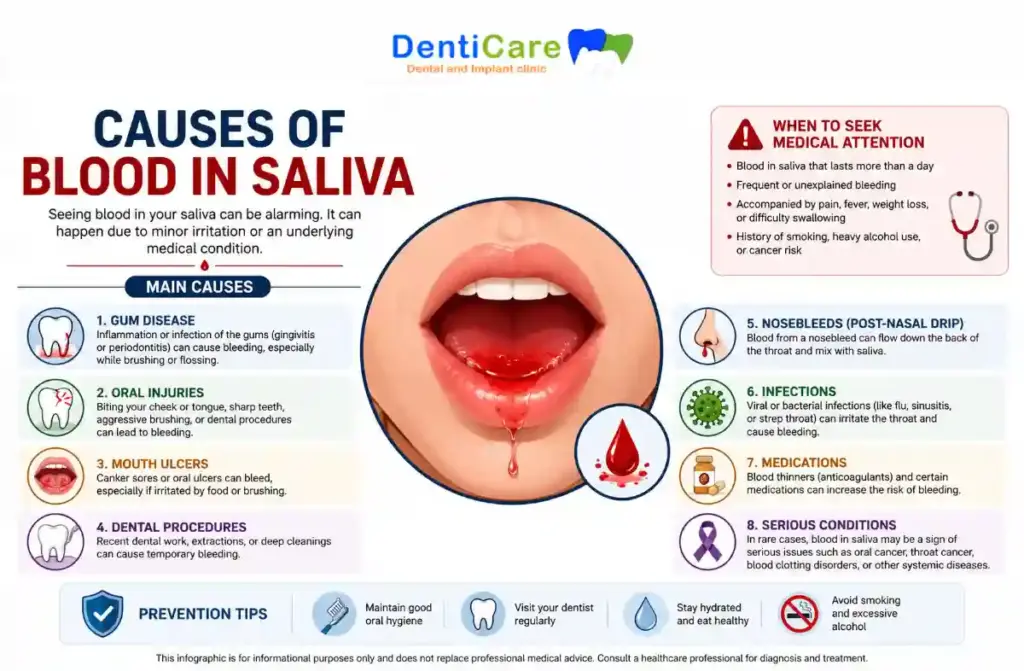
What Causes Oral Bleeding?
Gum Disease
Gum disease is the most frequent reason people see blood when they spit. Gingivitis, the earliest stage, causes red, swollen, bleeding gums. Left untreated, it can progress to periodontitis, which damages the bone and tissue holding your teeth in place.
Plaque and hardened tartar along the gumline keep tissue irritated, so bleeding tends to show up during brushing, eating, or first thing in the morning.
Poor Oral Hygiene
Skipping regular brushing and flossing lets bacteria build up quickly. Over time, plaque hardens into tartar, which inflames the gums and makes them bleed more easily. A consistent daily routine reverses this in most cases.
Aggressive Brushing or Flossing
Brushing too hard, or using a hard-bristled toothbrush, can injure soft gum tissue. This is one of the more overlooked causes — many people assume something is seriously wrong when the real issue is technique. Switching to a soft-bristled brush and gentler pressure usually resolves it within a week or two.
Mouth Ulcers and Injuries
Accidental cheek bites, sharp or broken teeth, braces, ill-fitting dentures, and hot food can all cause small injuries inside the mouth. Ulcers that get repeatedly irritated may bleed too. Most heal on their own, but an ulcer lasting more than two weeks should be checked by a dentist.
Dental Infections
Tooth abscesses and infections can produce both pus and blood, along with pain, swelling, and an unpleasant taste. Left untreated, infection can spread beyond the tooth, so early treatment matters.
Dry Mouth and Dehydration
Reduced saliva flow leaves oral tissue more exposed to irritation. Dehydration, certain medications, smoking, and some medical conditions can all contribute to dry mouth.
Smoking and Tobacco Use
Smoking reduces blood flow to the gums, weakens the immune response, and significantly raises the risk of gum disease. It also slows healing, so existing irritation takes longer to settle.
Respiratory and Throat Infections
Occasionally, bleeding doesn’t come from the mouth at all — it originates in the throat or airway. Forceful coughing, sinus infections, tonsillitis, or other respiratory illness can bring traces of blood up with saliva or phlegm.
Anyone dealing with blood in saliva with cough should watch for accompanying signs like fever, chest pain, or breathing difficulty, and see a doctor if these appear, since this pattern points away from a dental cause.
Is It Ever a Sign of Something More Serious?
Most cases trace back to gum irritation, but a smaller number have causes that call for prompt medical attention. It helps to know what these look like:
- Blood-thinning medications: Drugs such as warfarin, aspirin, or other anticoagulants can make gums bleed more easily and for longer than usual.
- Bleeding or clotting disorders: Low platelet counts and certain clotting disorders can cause unexplained gum bleeding, sometimes alongside bruising elsewhere on the body.
- Oral cancer: Bleeding combined with a mouth sore that won’t heal, a lump, unexplained numbness, or trouble swallowing should be examined promptly — early diagnosis makes a real difference.
- Liver disease: Because the liver produces clotting factors, advanced liver conditions can present with gum bleeding.
- Pregnancy gingivitis: Hormonal changes during pregnancy often make gums more sensitive and prone to bleeding, even with a normal hygiene routine.
These causes are far less common than simple gum inflammation, so there’s no need to jump to conclusions. But heavy bleeding, bleeding that doesn’t improve with better oral hygiene, or bleeding with other unexplained symptoms is worth getting checked rather than waiting on.
Why Bleeding is Often Worse in the Morning
Saliva production drops significantly during sleep, giving bacteria more opportunity to multiply overnight. If gum inflammation is already present, that extra bacterial activity can lead to mild bleeding by the time you wake up.
People who breathe through their mouth while asleep, or who already have dry mouth, are especially likely to notice blood in saliva while sleeping, since their oral tissue stays dry and irritated for hours at a stretch. Teeth grinding overnight adds pressure on the gums and can make it worse.
This is also why blood in saliva in morning after sleeping is such a common complaint — plaque buildup overnight, combined with reduced saliva flow, is often enough to trigger light bleeding on its own. Brushing and flossing thoroughly before bed helps reduce how often this happens.
No Cough? What That Usually Means
When there’s no coughing involved, bleeding is almost always coming from inside the mouth rather than the airway. Gum disease, dental infections, ulcers, and general oral irritation account for the large majority of these cases.
If this happens alongside gum tenderness, bad breath, or sensitivity, a dental exam can usually identify the exact cause fairly quickly. Left unaddressed, the underlying issue — most often gum disease — tends to get worse rather than resolve on its own.
When Should You See a Dentist?
Occasional, mild bleeding isn’t always a red flag on its own. But book a dental visit if you notice:
- Bleeding that happens frequently or won’t go away
- Swollen or painful gums
- Teeth that feel loose
- Bad breath that doesn’t improve
- Mouth ulcers that haven’t healed after two weeks
- Bleeding every time you brush
- Pain while chewing
- Visible pus or other signs of infection
- Ongoing irritation anywhere in the mouth
Catching these issues early almost always means simpler, faster treatment.
How Denticare Diagnoses the Cause
Diagnosis starts with a detailed oral examination. Our dentists check the gums, teeth, tongue, and surrounding tissue for signs of infection, inflammation, or injury, and review your medical history and current medications, since several can affect bleeding.
A full evaluation may include:
- Comprehensive dental examination
- Digital dental X-rays
- Periodontal (gum) health assessment
- Review of oral hygiene habits
- Medical history and medication review
If the source appears to be medical rather than dental, we’ll refer you to the right specialist for further evaluation.
Treatment Options
Treatment depends entirely on the cause. At Denticare, care plans are built around what’s actually driving the bleeding.
- Professional Dental Cleaning: Scaling removes the plaque and tartar buildup most often behind gum irritation.
- Gum Disease Treatment: For gingivitis or periodontitis, deep cleaning and periodontal therapy bring infection and inflammation under control.
- Root Canal Treatment: For tooth infections, this may be needed alongside drainage or restorative work, depending on severity.
- Management of Ulcers and Injuries: May include medication, protective coatings, or adjusting dentures or braces that are causing irritation.
- General Dentistry Guidance: Personalized coaching on brushing technique, flossing, and preventive habits for long-term gum health.
Prevention Tips
- Brush twice a day with a soft-bristled toothbrush
- Floss gently once a day
- Stay well hydrated
- Avoid smoking and tobacco products
- Visit the dentist regularly
- Treat gum disease early rather than waiting
- Eat a balanced diet with enough vitamin C and K
- Avoid pressing too hard while brushing
- Use a dentist-recommended mouthwash
Conclusion
Blood in saliva is unsettling to see, but it’s usually tied to something manageable — gum disease, minor irritation, or a small injury inside the mouth. In rarer cases, it can point to a respiratory issue or an underlying medical condition, which is exactly why persistent bleeding shouldn’t be ignored.
Getting an early diagnosis makes treatment simpler, whether the cause turns out to be bleeding gums, an ulcer, an infection, or something that needs a referral elsewhere. Denticare Dental & Implant Clinic offers thorough evaluations and personalized treatment to get to the bottom of oral bleeding and help you maintain a healthy, comfortable smile.
Related reading: Dental Care Tips for Families