Medically Reviewed by Dr. Gnanaraj, BDS, MMC Chennai, PG Clinical Dentistry (Melbourne)
Principal Dentist, Denticare Dental & Implant Clinic
ASID Certified – Australian Society of Implant Dentistry
20+ years of clinical expertise in delivering advanced, patient-centered dental care
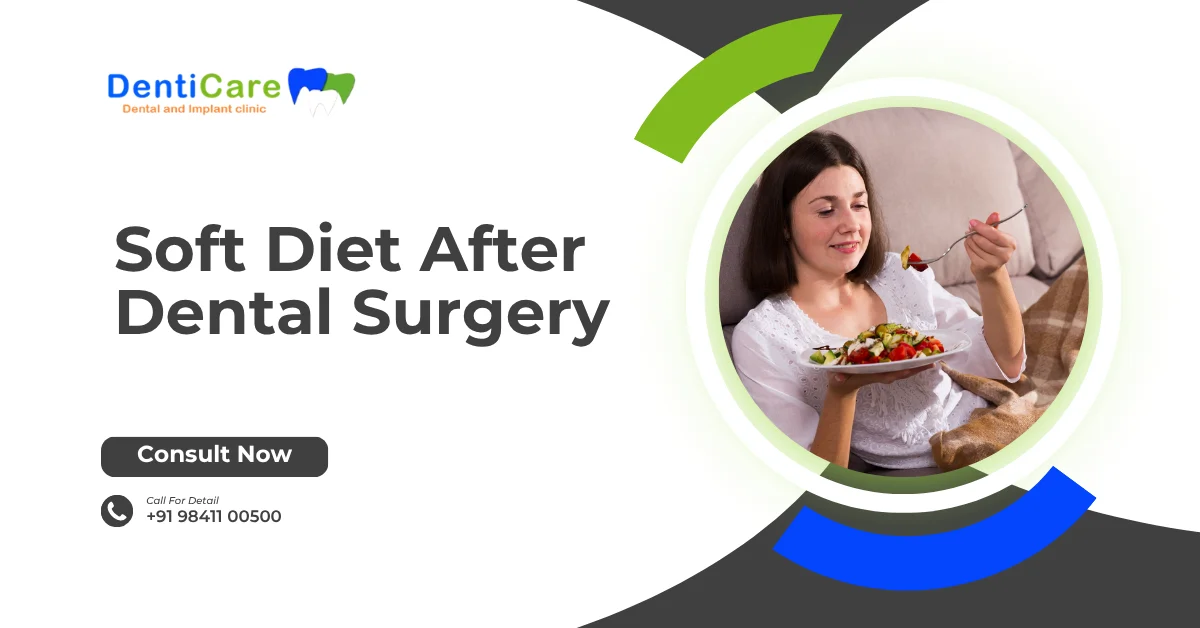
Recovering from a dental procedure takes more than rest and medication — what you eat in the days afterward has a direct impact on how quickly and comfortably you heal. Following a soft diet after dental surgery protects sensitive tissue, lowers the risk of complications, and still gives your body the nutrition it needs to repair itself.
Whether you’ve just had a tooth pulled, received a dental implant, had your wisdom teeth removed, or gone through gum surgery, the goal is the same: keep chewing pressure low, avoid irritants, and eat well enough to actually heal. At Denticare Dental and Implant Clinic, we walk every patient through a personalized soft diet for dental surgery before they leave the chair — because generic advice doesn’t account for the type of procedure, healing speed, or sensitivity each person experiences.
This guide covers what to eat, what to avoid, how long to stay cautious, and when it’s time to call your dentist.
Why a Soft Diet After Dental Surgery Matters
Gums and surrounding tissue stay tender for days after any dental work. Chewing something hard or crunchy during this window can reopen a wound, dislodge the blood clot at an extraction site, or simply cause needless pain.
A soft food diet after dental surgery solves three problems at once:
- It reduces mechanical stress on the surgical site, so tissue can knit back together undisturbed.
- It still delivers the protein, vitamins, and minerals your body needs for repair — skipping meals to avoid pain is one of the most common recovery mistakes we see.
- It makes eating far less painful, which in turn means patients actually eat enough during the first critical days.
In our experience at Denticare, patients who stick to a soft diet after dental surgery in the first 48–72 hours report noticeably less swelling and discomfort by day four compared to those who try to “push through” with normal meals too early.
Which Dental Procedures Call for a Modified Diet
Not every treatment needs the same level of caution, but most involve at least a short adjustment period.
Tooth Extraction
The socket is the most vulnerable spot in your mouth for the first few days. Sticking to a gentle diet after dental extraction helps prevent bleeding, irritation, and dry socket — one of the most painful and avoidable complications of extraction recovery.
Dental Implant Surgery
Implants need the surrounding jawbone to heal and fuse undisturbed — a process called osseointegration. A careful dental implant recovery diet keeps pressure off the site while that fusion takes place over the following weeks. Sticking to the right diet after dental implant surgery in these early weeks is one of the biggest factors in whether the implant integrates successfully.
Wisdom Tooth Removal
Swelling and soreness typically peak within the first three days. Easy-to-eat meals reduce strain while the jaw and surrounding gum tissue settle.
Gum Surgery
Periodontal procedures leave gum tissue especially sensitive. Sharp or crunchy foods can catch on stitches or irritate the treated area for a week or more.
Root Canal Treatment
Root canals are less invasive than surgery, but the treated tooth can stay tender to pressure for a few days — soft meals reduce unnecessary strain while it settles.
Best Foods to Eat During Recovery
A good soft diet after dental surgery balances gentleness with real nutrition — this isn’t about surviving on soup for a week.
Dairy
Yogurt, cottage cheese, and milk-based smoothies are easy on the mouth and don’t require chewing. Greek yogurt is a particularly good choice — it’s high in protein and contains probiotics that support gut and immune health while you heal.
Protein Sources
Protein drives tissue repair, so don’t skip it just because chewing is uncomfortable:
- Scrambled eggs
- Soft-cooked fish
- Tofu
- Shredded, slow-cooked chicken
- Mashed beans or lentils
Soft Fruits and Vegetables
These bring vitamins and antioxidants that help calm inflammation:
- Ripe bananas
- Unsweetened applesauce
- Avocado
- Steamed or roasted vegetables
- Mashed sweet potato
Warm Comfort Foods
- Oatmeal
- Well-cooked rice
- Soft pasta
- Broths and blended soups
- Mashed potatoes
Foods to Avoid While Healing
Steering clear of the wrong foods matters just as much as choosing the right ones on any soft diet after dental surgery.
- Hard or crunchy items — chips, nuts, popcorn, and crackers can lodge in a surgical site or scrape healing tissue.
- Sticky or chewy foods — caramel, gum, and chewy candy can tug at stitches or a healing clot.
- Spicy or acidic foods — citrus, hot sauce, and vinegar-based dressings tend to sting sensitive areas.
- Very hot foods and drinks — heat can worsen swelling and irritate the surgical site.
- Sugary snacks and carbonated drinks — sugar feeds bacteria near a healing wound, and carbonation can irritate it directly.
Sample Meal Plan for Recovery Week
This sample plan gives you a practical starting point for a soft diet after dental surgery — adjust portions and pacing to how you’re feeling day to day.
Breakfast
- Oatmeal with mashed banana
- Greek yogurt blended with soft fruit
- Scrambled eggs
Lunch
- Creamy vegetable soup
- Mashed potatoes with soft-cooked fish
- Rice with steamed vegetables
Dinner
- Pasta in a smooth sauce
- Shredded chicken with mashed sweet potato
- Blended lentil soup
Snacks
- Applesauce
- Cottage cheese
- Avocado mash
- Protein shake
Don’t Forget Hydration
Water supports healing and helps prevent dry mouth, which can slow recovery and increase discomfort. One important caution: avoid drinking through a straw for the first several days after an extraction — the suction can dislodge the blood clot protecting the socket and lead to a painful dry socket.
Smoothies, milk, and broths count toward your fluid intake too, and they’re an easy way to get calories in when solid food still feels like too much.
Tips for a Smoother Recovery
- Slow down. Rushed chewing puts more pressure on tender tissue than you’d expect.
- Chew on the opposite side of your mouth from the surgical site whenever you can.
- Keep up gentle oral hygiene. Brush carefully around the area and follow your dentist’s specific rinsing instructions.
- Skip smoking and alcohol. Both measurably slow tissue healing and raise infection risk.
- Follow your dentist’s specific instructions — healing timelines vary by procedure and by patient, so personalized guidance beats generic advice every time.
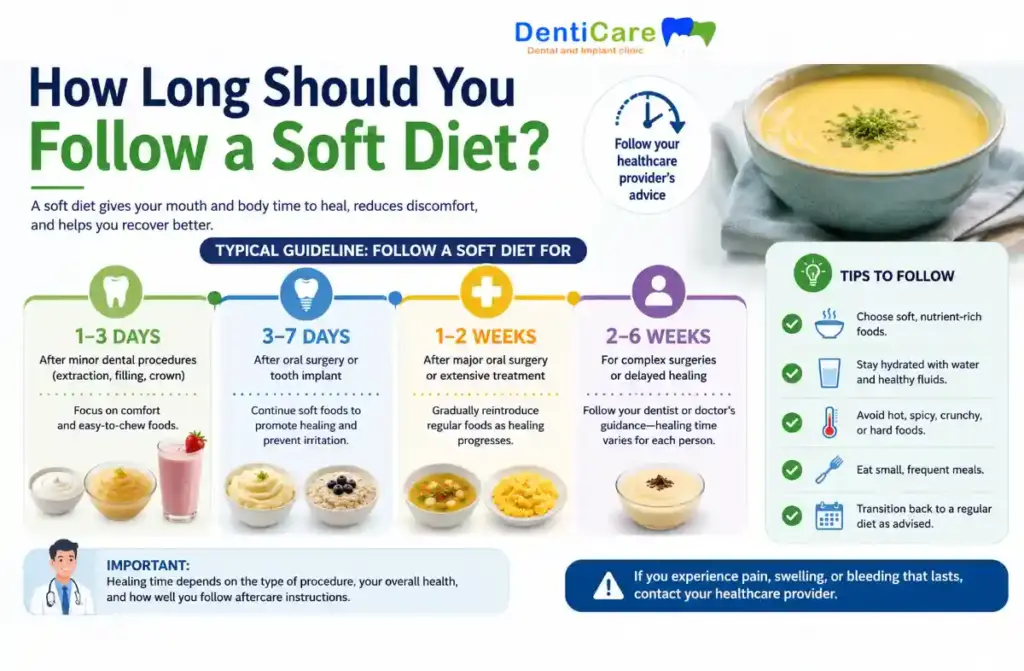
How Long Should You Stay on a Soft Diet After Dental Surgery?
Recovery timelines vary by procedure:
- Tooth extraction: Most patients can ease back to normal food within 5–7 days, once the socket has closed over.
- Dental implants: Plan for several weeks of caution, since the implant needs time to stabilize in the jawbone before it can handle normal chewing forces.
- Wisdom tooth removal: Roughly one week, depending on how much swelling you experience.
- Gum surgery: Avoid crunchy foods until your dentist confirms the gum tissue has fully closed.
Your dentist will tell you when it’s safe to expand your diet — timelines above are general guidance, not a substitute for that conversation.
Easing Back Into Normal Eating
Don’t jump straight from soft food to a steak. Bridge the gap with foods like:
- Soft sandwiches
- Well-cooked vegetables
- Tender, slow-cooked meats
- Soft bread
If chewing brings back pain or sensitivity at any point, scale back to a soft diet after dental surgery for a few more days before trying again.
When to Call Your Dentist
Mild soreness is expected. These signs are not:
- Swelling that keeps getting worse instead of better
- Severe or worsening pain
- Bleeding that won’t stop
- Fever or other signs of infection
- Ongoing difficulty eating after several days
If you notice any of these, contact Denticare Dental and Implant Clinic right away — catching a complication early makes it far easier to treat.
Why Patients Choose Denticare for Post-Surgical Care
Denticare Dental and Implant Clinic builds a recovery plan around each patient rather than handing out a generic printout. That means specific guidance on timelines, foods, and warning signs tailored to your exact procedure — whether it’s a routine extraction or an advanced implant case — plus direct access to the clinic if something doesn’t feel right during healing.
Conclusion
Following a proper soft diet after dental surgery is one of the most important steps in ensuring a smooth and comfortable recovery. Soft foods protect healing tissues, reduce discomfort, and provide essential nutrients needed for faster healing. Whether recovering from a tooth extraction, gum surgery, or implants, choosing the right foods can significantly improve your recovery experience. By following professional dietary recommendations, avoiding irritating foods, and maintaining good oral hygiene, patients can heal more comfortably and return to normal eating habits safely. Denticare Dental and Implant Clinic is committed to helping patients recover successfully with expert dental care and personalized guidance throughout every stage of treatment.
Read also When Should a Child Get Braces.