Safety Rate
Safety Rate
Root canal treatment in Chennai has helped thousands of patients at Denticare Dental & Implant Clinic save a decayed or infected tooth instead of losing it to extraction. During root canal treatment, the dentist removes the infected pulp tissue from inside the tooth, cleans and disinfects the canal, and seals it to stop the infection from coming back. Many people still picture root canals as painful, but with modern anesthesia and rotary instruments, most patients say the procedure feels no different from getting a routine filling.
If you are searching for the best root canal treatment in Chennai, it helps to understand what the procedure involves, when it becomes necessary, and how to care for your tooth afterward. This guide walks through the full process at Denticare Dental & Implant Clinic, from the first signs of infection to long-term aftercare.
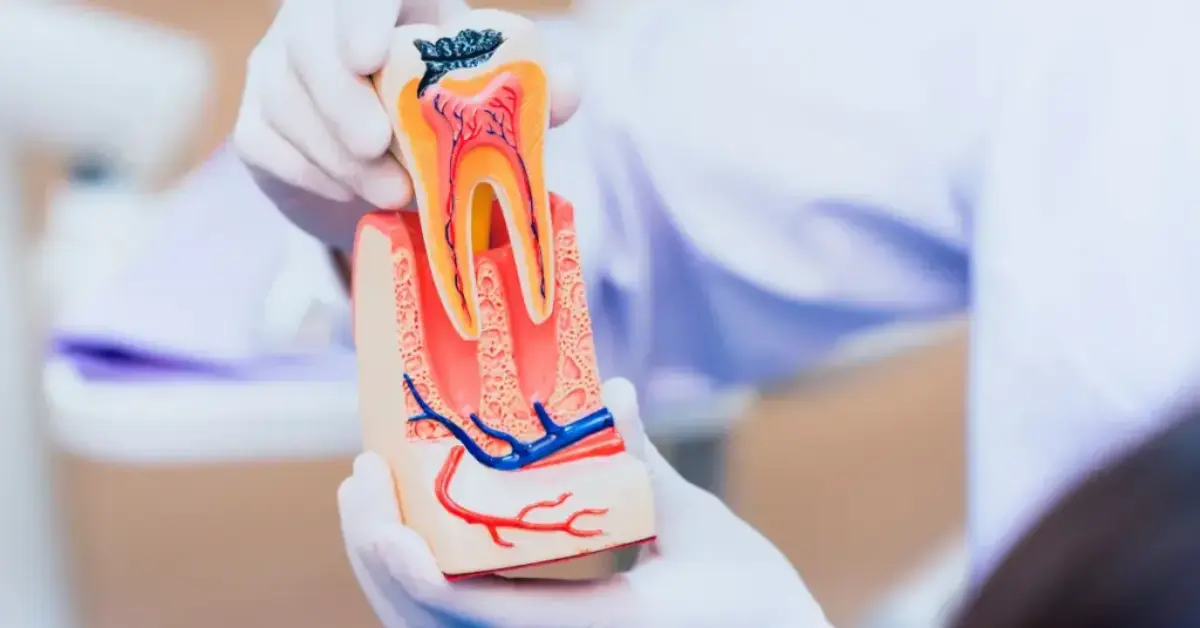
Every tooth has a soft inner tissue called the pulp, made up of nerves, blood vessels, and connective tissue. When bacteria reach the pulp through a deep cavity, crack, or old filling that has failed, the tissue becomes inflamed and infected. Left alone, this infection does not heal on its own — it spreads deeper into the tooth and eventually into the surrounding bone.
This treatment addresses the problem directly. The dentist opens a small access point in the tooth, removes the infected pulp, shapes and disinfects the canals, and fills them with a biocompatible material called gutta-percha. A filling or crown is then placed on top to restore the tooth's strength. The result is a tooth that looks and functions like any other, without the infection that was causing pain.
Catching an infection early makes treatment simpler and less expensive, so it's worth knowing what to watch for. At Denticare Dental & Implant Clinic, patients usually come in with one or more of the following:
Pain that lingers well after eating or that wakes you up at night is different from ordinary sensitivity. It often points to nerve involvement rather than a surface-level cavity.
A quick twinge when you bite into ice cream is normal. Pain that continues for a minute or more after the hot or cold trigger is removed usually means the pulp is inflamed.
A small pimple-like bump near the root of a tooth, or gum swelling that doesn't go down, can indicate an abscess. This needs prompt attention from a root canal specialist in Chennai to prevent the infection from spreading further.
A tooth that gradually turns grey, yellow, or dark can signal that the internal tissue has died, even if there's no visible pain.
If biting down on a specific tooth causes a sharp or dull ache, the ligament around the root may already be affected by infection.
If any of these symptoms sound familiar, it's worth booking an exam rather than waiting for the pain to pass, since pulp infections rarely resolve on their own.
Not every toothache means you need a root canal, but a few specific situations almost always do:
Patients outside the immediate area often ask whether the same standard of care is available closer to home — for instance, we also see patients looking for root canal treatment in Mogappair and nearby neighborhoods, and the process and technology used are identical across all our locations.
A root canal at Denticare Dental & Implant Clinic typically follows six steps:
Most cases at our root canal clinic in Chennai are completed in one to two visits, depending on how many canals the tooth has and how advanced the infection is. Molars, which have more canals than front teeth, sometimes need a second appointment to be thorough.
Recovery is usually straightforward, but a few precautions in the days afterward help the tooth heal properly:
Mild soreness for two to three days is normal and typically responds to over-the-counter pain relief. Pain that gets worse instead of better, or swelling that doesn't subside, should be reported to your dentist promptly rather than waiting it out.
Compared to extraction, saving the natural tooth through root canal therapy has several advantages:
With proper aftercare, a treated tooth can last a lifetime, which is why most dentists consider this a far better long-term investment than removing the tooth altogether.
Root canal treatment is a routine, well-tolerated procedure, but like any dental work it carries a small set of manageable side effects:
If a canal was unusually curved or narrow, occasionally a tooth needs retreatment. This isn't a sign that anything went wrong — some root canal systems are simply more complex than others — and a skilled root canal specialist in Chennai will flag this possibility during your initial consultation if the anatomy looks challenging on the X-ray.
The cost of root canal treatment in Chennai depends on which tooth is affected — molars with multiple canals generally cost more to treat than front teeth — as well as whether a crown is needed afterward and the materials used. As a general guide, root canal treatment cost in Chennai tends to fall into a moderate range compared to metro cities elsewhere in India, and it is almost always less expensive than extracting the tooth and replacing it with an implant later. Denticare Dental & Implant Clinic provides a clear, itemized estimate after the initial X-ray and consultation, so there are no surprises once treatment begins.
Not every root canal clinic in Chennai offers the same combination of technology, experience, and follow-up care. At Denticare Dental & Implant Clinic, treatment is carried out using digital X-rays, rotary endodontic instruments, and apex locators that allow the dentist to measure canal length precisely rather than estimating. This reduces the chances of missed canals or incomplete cleaning, which are the most common reasons root canals fail elsewhere.
Our team includes a dedicated root canal specialist in Chennai with focused training in endodontics, rather than general dentists handling root canals as one of many procedures. Combined with transparent pricing and same-week appointments in most cases, this is why many patients researching root canal treatment in Chennai choose to have their consultation with us first.
Root canal treatment remains one of the most reliable ways to save a tooth that would otherwise need to be removed. Root canal treatment in Chennai has become significantly more comfortable in recent years, thanks to better anesthesia, digital imaging, and rotary instruments that make the procedure faster and more predictable. Ignoring the early signs of pulp infection, however, only makes treatment more complex and costly later on.
If you're dealing with persistent tooth pain, sensitivity, or swelling, it's worth getting it checked rather than waiting. Denticare Dental & Implant Clinic offers experienced care, transparent pricing, and modern equipment for patients looking for root canal treatment in Chennai, and our team is happy to walk you through the exam, the estimate, and the treatment plan before anything begins. Book a consultation today to find out whether a root canal — or a simpler option — is the right next step for your tooth.
Not with modern anesthesia. Most patients feel pressure rather than pain during the procedure, and any soreness afterward is mild and manageable with over-the-counter medication.
A single-canal tooth can often be completed in one visit of 45 to 60 minutes. Molars with multiple canals may need a second visit for a total of one to two hours of treatment time.
Pricing depends on the tooth involved and whether a crown is required afterward. Denticare Dental & Implant Clinic provides a written estimate after your X-ray and consultation, so you know the full cost before treatment starts.
It’s uncommon, but possible if a canal was missed or the seal breaks down over time. Regular check-ups catch this early, and retreatment is usually straightforward.
With a properly fitted crown and normal oral hygiene, a treated tooth can last for decades — in many cases, a lifetime.
In most cases, yes. Keeping your natural tooth preserves jawbone density, chewing function, and appearance, and it’s generally more cost-effective than extraction followed by an implant or bridge.
Hear directly from our patients about their transformation journeys.
Our experienced anaesthesiologists are here to ensure your safety and comfort