
Medically Reviewed by Dr. Gnanaraj, BDS, MMC Chennai, PG Clinical Dentistry (Melbourne)
Principal Dentist, Denticare Dental & Implant Clinic
ASID Certified – Australian Society of Implant Dentistry
20+ years of clinical expertise in delivering advanced, patient-centered dental care
Bad breath is more than an occasional inconvenience — it can affect confidence, relationships, and sometimes point to an underlying health issue. Most people assume poor brushing is the only culprit, but the reality is more layered. Tongue bacteria, dry mouth, gum disease, diet, smoking, sinus issues, and digestive problems can all play a part. This guide breaks down what causes bad breath, the warning signs worth watching, and practical, dentist-approved ways to fix it — including why some people still notice bad breath even after brushing, and when the cause may not be in the mouth at all.
Introduction
Almost everyone has dealt with bad breath at some point — after waking up, after coffee, or after a garlic-heavy meal. Usually it clears up with brushing or a glass of water. But when it keeps coming back no matter what you do, it’s worth asking a more specific question: what causes bad breath when your oral hygiene routine seems fine?
Persistent bad breath, medically called halitosis, can affect how confident you feel in conversations, meetings, and close relationships. Many people don’t even realize their breath is a problem, because the brain quickly “tunes out” familiar smells — a phenomenon called olfactory fatigue.
Understanding what causes bad breath is the first step toward solving it permanently instead of just masking it with mints.
What is Bad Breath (Halitosis)?
Bad breath, medically known as halitosis, is an unpleasant odor coming from the mouth or breath. It can be temporary — tied to a meal or drink — or chronic, persisting despite regular brushing.
Most cases start inside the mouth. Oral bacteria break down leftover food particles, dead cells, and proteins, releasing sulfur compounds known as volatile sulfur compounds (VSCs) — the primary chemical source of the odor.
Fact check: Dental researchers estimate that oral bacteria counts in a single mouth can run into the billions. Most are harmless; a small subset of anaerobic species are responsible for the odor-causing gases.
How Common is Bad Breath?
Halitosis is one of the most frequent reasons people seek dental advice, after cavities and gum disease. Studies on oral health consistently rank it among the top patient complaints worldwide, and dentists estimate that a meaningful share of adults experience chronic (not just occasional) bad breath at some point in their lives. Despite how common it is, it remains one of the most under-discussed dental concerns — many patients feel embarrassed to bring it up, even during a routine checkup.
Common Signs to Watch For
Because of olfactory fatigue, most people cannot reliably smell their own breath. Watch for these instead:
- A persistent unpleasant taste — bitter, metallic, or sour, often linked to bacterial buildup.
- A dry or sticky mouth, especially on waking — lower saliva means more active bacteria.
- A white or yellow coating on the tongue — trapped bacteria and food debris.
- Constantly reaching for gum or mints — often a sign of an underlying, unaddressed cause.
- Morning breath that doesn’t go away even after breakfast and brushing.
- Friends or family mentioning it — often noticed by others before the person themselves.
What Causes Bad Breath? The Main Culprits Explained
Poor Oral Hygiene
This is still the single most common cause of bad breath worldwide. Food particles trapped between teeth, along the gumline, and on the tongue get broken down by bacteria, releasing sulfur compounds.
Common signs: plaque buildup, bleeding gums, yellow teeth, and food trapped between teeth.
Tongue Bacteria — The Overlooked Culprit
Many people brush diligently but skip their tongue entirely. The tongue’s surface is covered in tiny grooves that trap bacteria, food debris, and dead cells, forming a visible white or yellow coating. Some clinical estimates suggest tongue bacteria alone contribute to a large share of chronic bad breath cases — which is exactly why patients who brush well can still ask, “why do I have bad breath even after brushing?”
Dry Mouth (Xerostomia)
Saliva is your mouth’s natural cleanser — it washes away food particles, buffers acids, and limits bacterial growth. When saliva flow drops, bacteria multiply faster. Common causes include dehydration, mouth breathing, certain medications, smoking, stress, diabetes, and aging. This is also why saliva production slows overnight, causing morning breath.
Gum Disease (Periodontal Disease)
Bad breath is often one of the earliest signs of gum disease. Bacterial infection creates small pockets around the teeth that trap debris and produce a constant odor. Left untreated, it can progress to bleeding, swelling, gum recession, and eventually tooth loss. A dentist offering gum treatment can usually spot this at a routine visit, long before it becomes serious.
Tooth Decay and Dental Infections
Cavities create hidden pockets where bacteria thrive, and advancing decay traps food particles inside the damaged tooth structure. Dental abscesses, in particular, produce a strong odor due to pus accumulation — and often require root canal treatment to resolve both the infection and the smell.
Food Choices and Diet Habits
Garlic, onions, coffee, alcohol, spicy food, and certain fish contain compounds that enter the bloodstream after digestion and are released through the lungs when you breathe — which is why brushing alone doesn’t fully remove the smell of garlic. Low-carb and keto diets can also cause “keto breath,” a fruity or acetone-like odor produced when the body burns fat for fuel instead of carbohydrates.
Smoking and Tobacco Use
Tobacco leaves its own residual odor, dries out the mouth (reducing saliva), and raises the risk of gum disease — a triple effect that makes chronic bad breath far more likely in smokers, many of whom are unaware of the severity because smoking also dulls the sense of smell over time.
Sinus Problems and Tonsil Stones
Bad breath doesn’t always start in the mouth. Chronic sinus infections, allergies, and postnasal drip let mucus collect in the throat, feeding bacteria. Tonsil stones — small deposits of trapped food, bacteria, and dead cells — are another common but often-missed cause, sometimes producing a strong odor even with excellent oral hygiene.
Bad Breath from Stomach and Digestive Issues
Contrary to popular belief, bad breath from stomach conditions is less common than people assume — most halitosis starts in the mouth, not the gut. That said, certain digestive issues genuinely contribute: acid reflux (GERD), chronic indigestion, Helicobacter pylori infection, and other gastrointestinal disorders. GERD, in particular, allows stomach contents to travel up the esophagus, creating a sour-smelling breath odor that’s distinct from typical oral bad breath.
Medical Conditions That Affect Breath
| Condition | Breath Characteristic |
| Diabetes | Fruity or sweet odor |
| Kidney disease | Ammonia-like smell |
| Liver disease | Musty odor |
| Lung infections | Foul odor |
| Chronic sinusitis | Persistent unpleasant smell |
These causes are less common than dental ones but should never be dismissed, especially if breath odor changes suddenly without a clear dietary or hygiene explanation.
Why You Might Still Have Bad Breath Even After Brushing
This is one of the most common frustrations patients bring up. If bad breath even after brushing keeps happening, the cause is usually one of the following:
- The tongue is being missed — brushing teeth alone leaves tongue bacteria untouched.
- Flossing is skipped, leaving trapped particles between teeth that a brush can’t reach.
- Dry mouth is reducing saliva’s natural cleansing effect between brushings.
- Gum disease or a cavity is producing odor from below the gumline or inside a tooth, which brushing can’t fix.
- The source isn’t oral at all — sinus, tonsil, or digestive causes won’t respond to brushing.
If this pattern continues for more than a couple of weeks despite a solid routine, it’s worth having it checked rather than brushing harder or more often.
Bad Breath Myths vs. Facts
Myth: Bad breath always comes from the stomach. Fact: Most cases start inside the mouth; stomach-related causes are the exception, not the rule.
Myth: Mouthwash permanently cures bad breath. Fact: Mouthwash usually masks odor temporarily rather than treating the underlying cause.
Myth: If you brush your teeth, bad breath can’t happen. Fact: Tongue bacteria, gum disease, and dry mouth can all cause odor even with good brushing habits.
Myth: Only adults get bad breath. Fact: Children can develop it too, often from poor hygiene, sinus issues, or tonsil stones.
How Dentists Diagnose the Cause of Bad Breath
A dentist doesn’t just take your word for it — diagnosis typically involves:
- Organoleptic assessment — a trained clinician directly assesses breath odor and intensity.
- Halimeter or gas chromatography testing — measures volatile sulfur compound levels objectively.
- A full oral exam — checking for cavities, gum pockets, tongue coating, and dry mouth.
- Medical history review — ruling in or out sinus, digestive, or systemic causes.
This is why a persistent case is worth a professional visit rather than guesswork at home.
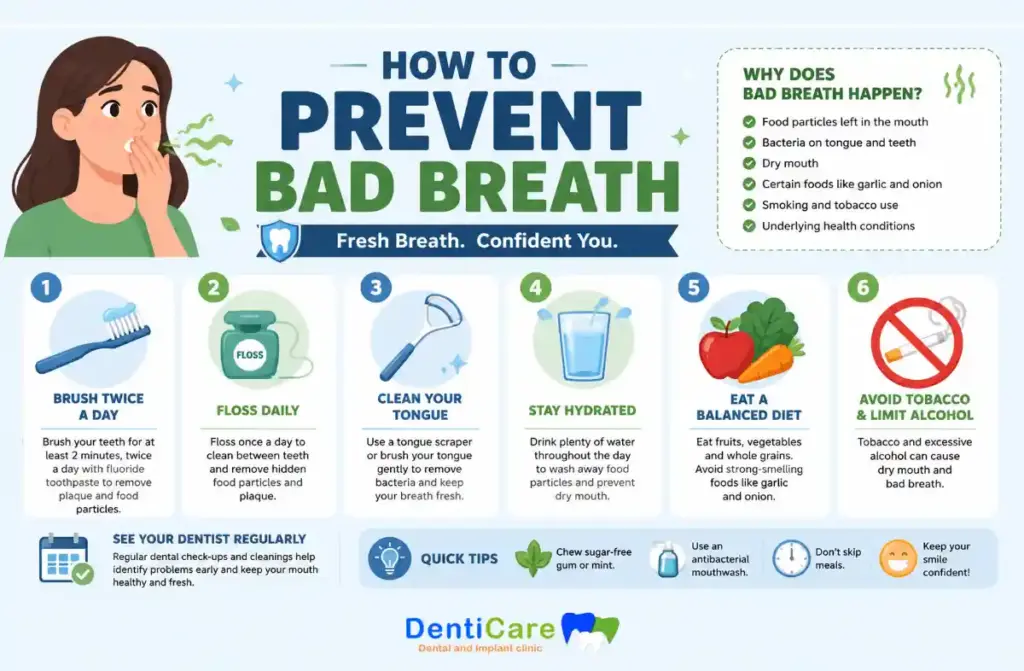
How to Prevent Bad Breath Long-Term
- Brush twice daily for a full two minutes.
- Floss every day to clear particles a brush can’t reach.
- Clean your tongue with a scraper or brush, not just your teeth.
- Stay well hydrated throughout the day.
- Manage chronic conditions like diabetes or acid reflux with your doctor.
- Replace your toothbrush every three months.
- Avoid skipping meals, which can worsen breath odor.
- Get a professional cleaning every six months.
Learning how to prevent bad breath long-term comes down to consistency — daily habits matter more than any single product.
How to Cure Bad Breath Fast (Quick Fixes)
If you need fresher breath before a meeting or event, here’s how to cure bad breath fast in the short term:
- Drink water immediately to rinse away odor-causing bacteria.
- Brush your teeth and tongue.
- Floss to remove trapped particles.
- Chew sugar-free gum to stimulate saliva.
- Eat a crunchy apple or carrot.
- Use an alcohol-free mouthwash (alcohol-based ones can dry the mouth further).
- Rinse your mouth after meals.
These are short-term fixes — they don’t replace addressing the root cause.
Foods That Naturally Freshen Breath
- Apples – help remove food particles through natural chewing.
- Carrots – stimulate saliva production.
- Celery – acts like a natural toothbrush.
- Yogurt – may reduce odor-causing bacteria.
- Parsley – contains compounds that temporarily neutralize odor.
- Leafy greens – support overall oral health.
Bad Breath in Children, Pregnancy, and Older Adults
- Children: Often caused by poor brushing habits, sinus congestion, mouth breathing, or tonsil stones rather than gum disease.
- Pregnancy: Hormonal changes increase the risk of gum inflammation (“pregnancy gingivitis”), a common and often overlooked cause of bad breath during pregnancy.
- Older adults: Reduced saliva flow (often medication-related), along with a higher likelihood of gum disease and dentures needing proper cleaning, makes bad breath more common with age.
When Bad Breath Signals a Bigger Problem
See a dentist or doctor if bad breath comes with:
- Persistent bleeding or swollen gums
- Loose teeth
- Tooth pain
- Difficulty swallowing
- Recurring sore throat
- Chronic acid reflux
- Dry mouth lasting several weeks
- Unexplained weight loss
- Persistent mouth sores
How to Avoid Bad Breath from Mouth Odor for Good
Beyond daily brushing, the most effective way how to avoid bad breath from mouth-related causes is to treat your tongue, gums, and hydration as seriously as your teeth. Routine dental visits catch the problems — gum pockets, cavities, dry mouth — that a home routine alone can miss.
Dental Care Matters More Than You Think
Routine dental exams can detect cavities, gum disease, oral infections, dry mouth, and early signs of oral cancer — all potential contributors to chronic odor. Professional cleanings also remove tartar that brushing alone can’t touch.
If your bad breath hasn’t improved despite a solid home routine, book an appointment with Denticare for a proper evaluation rather than continuing to guess at the cause.
Expert Insight
“Patients often come in assuming bad breath means they’re not brushing enough,” says Dr. Gnanaraj Jayabal, lead dentist at Denticare. “In reality, we diagnose gum disease, dry mouth, or even sinus issues in a large number of these cases. Bad breath is a symptom, not a diagnosis in itself — treating the cause is what actually fixes it long-term.”
Final Thoughts
Bad breath may seem minor, but it often reflects something specific about your oral or overall health. Occasional bad breath is normal; persistent halitosis deserves attention. Most cases improve with better hygiene, tongue cleaning, hydration, and regular dental visits. When home care doesn’t resolve it, a professional evaluation can uncover hidden causes — from gum disease to digestive issues — and guide the right treatment.
Now that what causes bad breath is clearer, the next step is simple: build the daily habits above, and see a dentist if the odor doesn’t budge.
Read also: What is a Dental Hygienist