
Let’s be honest—many people don’t look forward to visiting the dentist. Maybe it’s the sound of dental instruments, a childhood memory, or simply the fear of discovering that something is wrong. As a result, countless people postpone dental appointments until they experience pain or discomfort.
What many don’t realize is that most dental visits are not about treating problems—they’re about preventing them. In fact, one of the first professionals you’ll usually meet during a routine dental appointment isn’t the dentist at all. It’s the dental hygienist. If you’ve ever wondered what is a dental hygienist, the answer lies in the essential role they play in keeping your teeth and gums healthy through preventive care.
Dental hygienists are the friendly professionals who help keep your teeth and gums healthy through regular cleanings, oral health assessments, and practical advice for maintaining a healthy smile. Their goal is not to perform complex treatments but to help you avoid needing them in the first place.
By identifying potential issues early and encouraging healthy oral habits, dental hygienists play a vital role in preventive care. Understanding what is a dental hygienist and what they do can make dental visits feel less intimidating and help you appreciate why regular appointments are one of the best things you can do for your long-term oral health.
Quick Dental Tip:
The best way to avoid major dental procedures is to attend regular preventive appointments. Small issues are often easier, faster, and less expensive to treat when detected early.
What is a Dental Hygienist in Simple Terms?
A dental hygienist is a licensed oral healthcare professional who specializes in preventive dental care. In simple terms, they are the professionals responsible for cleaning teeth, monitoring oral health, and teaching patients how to care for their mouths properly at home.
Think of them as your oral health coach. While dentists diagnose and treat dental conditions, hygiene professionals focus on helping prevent those conditions from developing in the first place. Their work supports healthier teeth and gums while reducing the risk of cavities, gum disease, bad breath, enamel wear, and other common oral health concerns.
Rather than only treating problems after they appear, these preventive care specialists help patients maintain healthy habits that protect their smiles for years to come. They also provide personalized guidance on brushing, flossing, nutrition, and lifestyle choices that can influence oral health.
Did You Know?
Plaque begins forming on teeth within hours after brushing. If it is not removed regularly, it can harden into tartar, which can only be removed through professional dental cleaning.
What Does a Dental Hygienist Do During an Appointment?
Many people assume a dental hygiene appointment consists only of polishing teeth. In reality, the visit involves a comprehensive assessment of your oral health and preventive care tailored to your specific needs.
The appointment typically begins with a review of your medical and dental history. Certain health conditions, medications, and lifestyle habits can influence oral health, making this step important for personalized care.
Next, the dental hygienist performs a thorough examination of your mouth. They look for signs of gum inflammation, plaque buildup, tartar accumulation, tooth decay, enamel erosion, and other concerns. In many cases, they also assess gum pocket depths to monitor periodontal health.
The professional cleaning process removes plaque and hardened tartar deposits from areas that are difficult to reach with a toothbrush or floss. Once these deposits are removed, the teeth are polished to eliminate surface stains and leave the mouth feeling fresh and clean.
Some patients may receive fluoride treatment to strengthen tooth enamel and provide additional protection against cavities. Before the appointment ends, the hygienist offers individualized guidance on brushing, flossing, dietary habits, and oral hygiene practices.
| Stage of Appointment | Purpose |
|---|---|
| Health History Review | Understand factors affecting oral health |
| Oral Examination | Identify early signs of dental problems |
| Plaque and Tartar Removal | Prevent cavities and gum disease |
| Tooth Polishing | Remove stains and smooth tooth surfaces |
| Fluoride Treatment | Strengthen tooth enamel when necessary |
| Oral Hygiene Guidance | Improve daily brushing, flossing, and home oral care routines |
Quick Dental Tip:
Hold your toothbrush at a 45-degree angle toward the gumline and use gentle circular motions rather than aggressive scrubbing. Brushing harder does not clean better—it can wear down enamel and irritate gums.
Is a Dental Hygienist Important for Long-Term Health?
A dental hygienist plays a much larger role than simply keeping teeth clean. Modern research continues to reveal strong links between oral health and overall wellbeing. Conditions such as diabetes, heart disease, respiratory infections, and even certain pregnancy complications have been associated with poor oral health. This means maintaining healthy teeth and gums is not only important for your smile but also for your general health.
Dental hygienists are often the first healthcare professionals to identify early signs of oral disease. Through routine examinations and preventive care, they can detect concerns before they become painful or costly to treat. Early intervention helps prevent cavities from progressing, reduces the risk of gum disease, and supports the preservation of natural teeth throughout life.
Regular visits to a dental hygienist can also improve confidence, speech, chewing ability, and quality of life. Healthy gums and teeth make it easier to enjoy a varied diet, communicate comfortably, and maintain a positive self-image. By focusing on prevention rather than treatment, dental hygienists help patients avoid many of the complications that can affect oral and overall health in the future.
One of the greatest advantages of preventive care is that many oral health issues can be managed before pain or visible symptoms develop.
What is a Dental Hygienist vs a Dentist?
Although dental hygienists and dentists work closely together, they perform different roles within the dental team.
A dental hygienist primarily focuses on prevention, maintenance, and patient education. Their goal is to help patients avoid dental problems through routine care and healthy habits.
A dentist is responsible for diagnosing oral diseases, creating treatment plans, and performing restorative and surgical procedures. Dentists treat conditions that require more advanced intervention.
The following comparison highlights the differences:
| Feature | Dental Hygienist | Dentist |
|---|---|---|
| Main Focus | Prevention and maintenance | Diagnosis and treatment |
| Professional Cleanings | Yes | Occasionally |
| Oral Health Education | Yes | Yes |
| Oral Examinations | Yes | Yes |
| Diagnose Dental Diseases | Limited scope | Yes |
| Fillings and Restorations | No | Yes |
| Root Canal Procedures | No | Yes |
| Tooth Extractions | No | Yes |
| Comprehensive Treatment Planning | Assists | Leads |
Rather than replacing one another, dental hygienists and dentists work as a team to provide complete oral healthcare.
Quick Dental Tip:
Even if your teeth feel perfectly healthy, dental problems can develop without symptoms. Routine dental visits remain essential even when you are not experiencing pain.
How to Become a Dental Hygienist
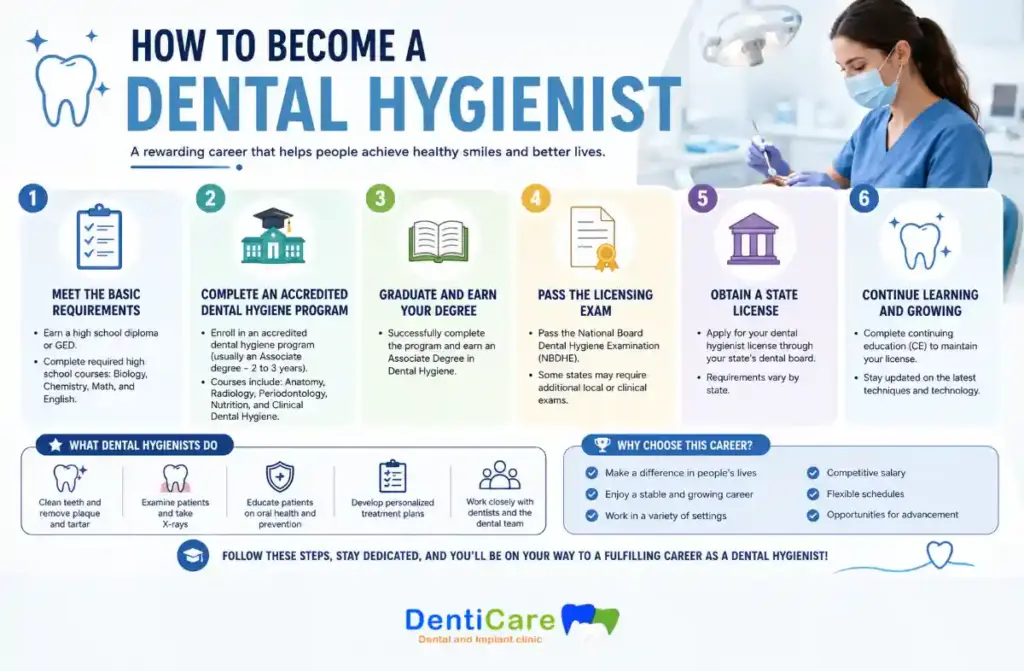
Becoming a dental hygienist requires specialized education, clinical training, and professional licensing. Individuals interested in this career typically complete an accredited dental hygiene program where they learn subjects such as anatomy, oral pathology, radiography, preventive dentistry, and patient care.
Alongside classroom education, students gain practical experience through supervised clinical training, allowing them to develop the skills needed to perform oral assessments, professional cleanings, preventive treatments, and patient education safely and effectively.
After completing their education, graduates must meet licensing requirements established by their region or country. Many continue pursuing professional development throughout their careers to stay informed about new technologies and advances in preventive dentistry.
Dental hygiene remains a rewarding healthcare profession because it combines science, patient interaction, and the opportunity to make a meaningful impact on people’s health every day.
Why Regular Visits Matter So Much
Even the most diligent brushing and flossing routine cannot completely remove all plaque and tartar from the mouth. Certain areas are difficult to clean thoroughly at home, allowing bacteria to accumulate over time. Professional hygiene visits help remove these deposits before they lead to cavities, gum disease, or other oral health concerns.
Regular appointments also provide an opportunity for early detection. Many dental problems develop silently and may not cause pain until significant damage has occurred. A dental hygienist can identify warning signs during routine examinations, often allowing issues to be addressed while they are still minor and easier to treat.
Another important benefit of regular visits is personalized guidance. Every person’s oral health needs are different. A dental hygienist can recommend brushing techniques, flossing methods, dietary adjustments, and preventive strategies tailored to your individual situation. Over time, these small improvements can have a significant impact on long-term oral health.
Ultimately, routine dental hygiene appointments are one of the simplest and most effective investments in preventive healthcare. They help maintain healthier teeth and gums, reduce future treatment costs, and contribute to a lifetime of better oral and overall health.
Quick Dental Tip:
Replace your toothbrush or electric toothbrush head every three to four months. Frayed bristles are less effective at cleaning teeth and may contribute to plaque accumulation.
Final Take
A dental hygienist is far more than someone who cleans teeth. They are preventive healthcare professionals dedicated to protecting oral health, identifying concerns early, and helping patients develop habits that support lifelong wellness.
Through professional cleanings, oral assessments, preventive treatments, and patient education, these oral health specialists play a crucial role in maintaining healthy smiles and reducing the risk of serious dental disease. Their work not only benefits the mouth but also contributes to overall wellbeing.
Many people spend years avoiding dental appointments because of fear, uncertainty, or the belief that dental care is only necessary when something hurts. In reality, the professional most patients see during routine visits is focused on prevention, education, and helping them stay healthy. Understanding the role of a dental hygienist can make dental care feel less intimidating and serve as a reminder that protecting your oral health is often much simpler than most people think.
Whether you are maintaining a healthy smile, improving your gum health, or simply trying to prevent future dental problems, regular preventive visits remain one of the smartest investments you can make in your long-term health. A healthier mouth truly contributes to a healthier life.