
Medically Reviewed by Dr. Gnanaraj, BDS, MMC Chennai, PG Clinical Dentistry (Melbourne)
Principal Dentist, Denticare Dental & Implant Clinic
ASID Certified – Australian Society of Implant Dentistry
20+ years of clinical expertise in delivering advanced, patient-centered dental care
Every parent hopes their child grows up with a healthy, confident smile. But two very common early habits — bottle feeding and thumb sucking — can quietly shape how a child’s teeth and jaw develop. So, does bottle feeding and thumb sucking affect teeth alignment? The short answer is yes, particularly when these habits continue beyond the age most children naturally outgrow them.
At Denticare Dental & Implant Clinic in Mogappair, we regularly see children with bite problems, mild speech difficulties, and early decay linked to prolonged sucking habits. The encouraging part: most of these issues are preventable with early guidance, gentle habit correction, and timely pediatric dental visits.
This guide breaks down how thumb sucking affects teeth and mouth development, the effects of bottle feeding on teeth, and practical steps parents can take to protect their child’s smile.
What Every Parent Should Know About Thumb Sucking
Thumb sucking is a natural self-soothing reflex, and most children stop on their own between ages 2 and 4. When the habit lingers past that window, it’s worth understanding what actually drives the risk to alignment.
Four factors determine the outcome:
- Age — the older the child, the more permanent the impact can be
- Frequency — how often the habit occurs each day
- Intensity — how forcefully the child sucks
- Duration — how long each sucking session lasts
Because a young child’s jaw is still soft and developing, sustained, forceful sucking can gradually reshape how teeth erupt and how facial structures grow.
Why Do Children Thumb Suck?
- Comfort and emotional security
- Association with falling asleep
- Habit triggered by boredom or stress
- A natural soothing reflex present from infancy
Occasional, light thumb sucking is rarely a concern. Aggressive or long-term sucking is what tends to alter dental alignment over time.
Does Bottle Feeding and Thumb Sucking Affect Teeth Alignment
Parents often ask whether thumb sucking directly causes crooked teeth or bite problems. Dental research supports the connection — the longer thumb sucking continues beyond early childhood, the greater the chance it affects how teeth and jaws align.
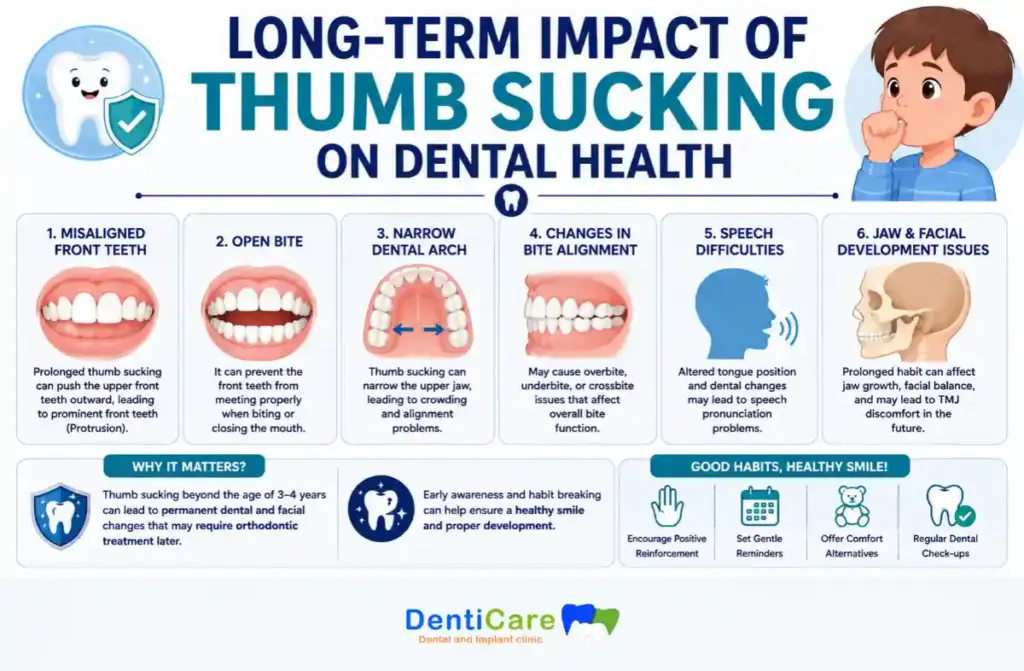
Common changes dentists observe include:
- Open bite — the upper and lower front teeth fail to meet, creating a visible gap
- Forward upper teeth (buck teeth) — constant thumb pressure pushes the upper teeth outward
- Narrow jaw shape — long-term pressure can narrow the upper arch, leading to crowding
- Speech difficulties — altered tongue posture can contribute to lisps or unclear pronunciation
- Tongue-thrusting habit — children may develop an incorrect swallowing pattern that worsens alignment further
These are the exact conditions that make early evaluation so important when a habit persists past the toddler years.
Long-Term Impact of Thumb Sucking on Dental Health
If thumb sucking continues past ages 4–5, the effects tend to become more visible and harder to reverse without intervention:
- Misaligned permanent teeth
- Bite problems that may require orthodontic treatment later
- Ongoing speech development difficulties
- Self-esteem concerns tied to visible dental changes
- Higher cavity risk linked to reduced saliva flow around the sucking area
This is the stage where prolonged sucking habits move from a passing childhood behavior to a genuine orthodontic and jaw-development concern.
Effects of Bottle Feeding on Teeth
Bottle feeding is completely normal in infancy. The concern arises when bottle use extends well past 18 months, since the constant sucking pressure involved is mechanically similar to thumb sucking — which is why the two habits are so often discussed together.
Effects of bottle feeding on teeth include:
- Early childhood cavities — night-time feeding with milk or juice significantly raises decay risk, since sugars pool around the teeth during sleep
- Improper jaw growth — continuous bottle sucking can influence how the jaw develops
- Forward teeth positioning — similar to thumb sucking, prolonged bottle use can push the front teeth outward
- Open bite or crossbite — toddlers who keep bottle-feeding for comfort (rather than nutrition) are more prone to alignment issues
Recognizing these bottle-feeding-related risks early gives parents a real chance to intervene before permanent teeth are affected.
How to Help Your Child Stop Thumb Sucking
At Denticare, we guide parents through gentle, child-friendly strategies rather than punitive ones:
- Positive reinforcement — reward charts, praise, and encouragement whenever the child avoids the habit
- Identify emotional triggers — stress, boredom, or tiredness often drive the behavior
- Keep hands engaged — soft toys, fidget items, or activity-based distractions help redirect the urge
- Gradually reduce bottle use — start by eliminating night-time bottles first
- Establish comfort rituals — bedtime stories, soothing music, or bonding activities can replace sucking as a soothing mechanism
- Habit-breaker appliances — if the habit persists past age 5–6, our Interceptive Orthodontics team can recommend a painless appliance designed to gently discourage thumb placement
Addressing the habit early is the single most effective way to prevent thumb sucking and bottle feeding from affecting teeth alignment long-term.
Best Age to Break the Habit
Thumb sucking:
- Most children stop naturally by age 4
- After age 4, dental changes become more noticeable
- By age 6, when permanent teeth begin erupting, stopping the habit is critical
Bottle feeding:
- Pediatric experts recommend weaning between 12–18 months
- Prolonged night-time feeding meaningfully increases both cavity and alignment risk
Why a Professional Dental Consultation Matters
Searching online can offer general guidance, but only a dentist can accurately assess a child’s:
- Jaw growth pattern
- Tooth eruption path
- Bite alignment
- Habit intensity and frequency
- Tongue posture and swallowing pattern
At Denticare, our Pediatric Dentistry team uses child-friendly examination methods and age-appropriate treatment plans — including Myobrace for children who need early myofunctional correction — to guide parents through safe, low-stress habit correction.
Early Dental Care Tips for Babies and Toddlers
Good habits established early prevent many alignment and decay issues down the line:
- Schedule the first dental visit by age 1
- Clean gums gently after feeding, even before teeth erupt
- Brush twice daily with a child-safe, age-appropriate toothpaste
- Avoid sugary bottles or prolonged bottle feeding, especially at night
- Encourage cup drinking by 12–15 months
These simple, consistent steps support healthy jaw development and reduce the likelihood of alignment problems later.
Why Choose Denticare Dental & Implant Clinic?
Our pediatric-friendly approach is built around prevention, early diagnosis, and gentle guidance for both children and parents.
What sets Denticare apart:
- Compassionate, child-centered care
- Advanced screening tools for early orthodontic detection
- Customized, gentle habit-correction methods
- Ongoing monitoring of jaw growth through early childhood
- Preventive plans designed for long-term dental health
Conclusion
So, does bottle feeding and thumb sucking affect teeth alignment? Yes — both habits can influence jaw growth, tooth positioning, and bite formation, particularly when they continue well past the age most children naturally stop. With timely dental evaluation, supportive behavior guidance, and a personalized care plan, most of these issues can be prevented or corrected without stress for you or your child.
If you’re concerned about your child’s thumb sucking, bottle feeding habits, or early signs of misalignment, schedule a visit at Denticare Dental & Implant Clinic. Early action supports a lifetime of healthy, confident smiles.
Read also: Bridal Smile Designing in Chennai.