
Parents often have many questions about their child’s oral health, especially when it comes to orthodontic treatment. One of the most common concerns is when should a child get braces. Since every child grows and develops differently, there is no one-size-fits-all answer. However, understanding the right timing for orthodontic evaluation and treatment can help parents make informed decisions that support their child’s long-term dental health.
Braces are designed to correct misaligned teeth, bite problems, spacing issues, and jaw irregularities. Addressing these concerns at the appropriate stage of development can improve oral function, enhance appearance, and reduce the risk of future dental complications. At Denticare Dental & Implant Clinic, we believe that early assessment and personalized treatment planning are key to achieving healthy, confident smiles.
In this guide, we will explore when should a child get braces, the factors that influence treatment timing, the signs that indicate orthodontic care may be needed, and what parents can expect throughout the process.
Understanding Orthodontic Treatment for Children
Orthodontic treatment focuses on correcting the alignment of teeth and jaws. Braces are one of the most effective tools used by orthodontists to gradually move teeth into their proper positions.
Children may require orthodontic treatment for several reasons, including:
- Crowded teeth
- Crooked teeth
- Gaps between teeth
- Overbite
- Underbite
- Crossbite
- Jaw growth abnormalities
Orthodontic treatment not only improves the appearance of a smile but also contributes to better oral hygiene, easier chewing, clearer speech, and improved self-confidence.
For many parents, the question remains: when should a child get braces to achieve the best possible outcome? The answer depends on several developmental factors that orthodontists carefully evaluate.
When Should a Child Get Braces?
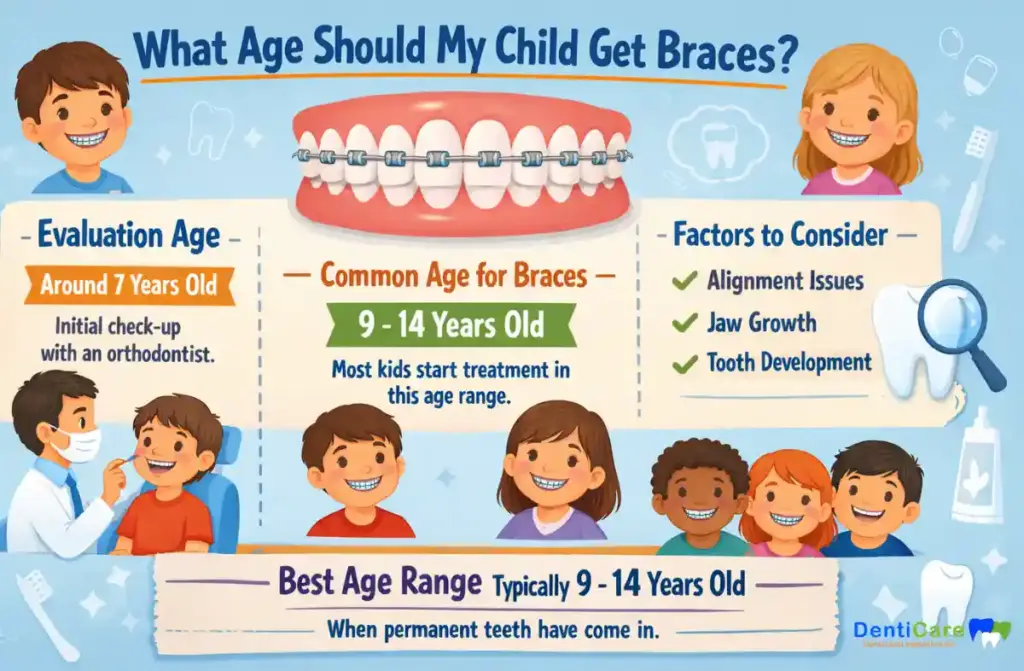
The question when should a child get braces is one that orthodontists hear frequently. While braces are commonly associated with teenagers, orthodontic evaluations often begin much earlier.
Most orthodontic specialists recommend that children undergo their first orthodontic assessment around the age of seven. At this stage, both baby teeth and permanent teeth are present, allowing the orthodontist to identify developing issues before they become more severe.
It is important to understand that an early evaluation does not necessarily mean a child will receive braces immediately. Instead, it helps determine the most appropriate treatment timeline based on individual growth patterns and dental development.
When considering when should a child get braces, orthodontists evaluate factors such as jaw growth, tooth eruption patterns, bite alignment, and overall oral health.
Why Age Seven Is Considered an Important Milestone
Many parents are surprised to learn that age seven is often recommended for an orthodontic evaluation. This age provides a valuable opportunity to assess the development of the teeth and jaws while a child is still growing.
At this stage, orthodontists can identify:
- Emerging crowding issues
- Bite irregularities
- Jaw growth discrepancies
- Harmful oral habits
- Potential spacing problems
Early assessment allows specialists to monitor changes over time and intervene when necessary. For parents wondering when should a child get braces, age seven serves as an excellent starting point for professional guidance.
Signs Your Child May Need Braces
Certain signs may indicate that orthodontic treatment could be beneficial. Recognizing these symptoms early can help parents seek timely evaluation.
- Crooked or Crowded Teeth: Teeth that overlap or appear crowded can make brushing and flossing more difficult, increasing the risk of cavities and gum disease.
- Bite Problems: Children with overbites, underbites, crossbites, or open bites may experience challenges with chewing, speaking, or jaw function.
- Early or Late Loss of Baby Teeth: Abnormal timing of baby tooth loss can affect how permanent teeth emerge and align.
- Difficulty Chewing: Children who struggle to bite or chew food properly may have underlying orthodontic concerns.
- Mouth Breathing and Thumb Sucking: Certain habits can influence jaw growth and tooth positioning, leading to orthodontic problems later.
These indicators often help answer the question of when should a child get braces, as early intervention can sometimes prevent more complex treatment in the future.
Is Seven Years Old Too Young for Braces?
A common misconception is that all orthodontic treatment begins during adolescence. In reality, some children benefit from early intervention.
This phase, often called interceptive orthodontics, addresses specific developmental concerns while the child is still growing. Examples include:
- Severe crowding
- Crossbites
- Jaw growth issues
- Harmful oral habits
However, many children do not require immediate treatment and are simply monitored until the ideal treatment window arrives.
This is why the question when should a child get braces cannot be answered solely based on age. The decision depends on each child’s unique dental and skeletal development.
Braces for Children Before 13
Many parents inquire about braces for children before 13 because they want to address orthodontic issues as early as possible. In some cases, beginning treatment before adolescence can help guide jaw growth and create space for permanent teeth.
Orthodontists may recommend braces for children before 13 when early intervention can reduce the complexity of future treatment or prevent worsening alignment problems.
Determining the Best Age for Braces in Kids
There is considerable discussion about the best age for braces in kids. While many children begin treatment between the ages of 10 and 14, the ideal timing varies from one individual to another.
The best age for braces in kids often corresponds with the period when most permanent teeth have erupted but jaw growth is still active. This allows orthodontists to achieve effective results while taking advantage of natural growth patterns.
Factors That Influence Treatment Timing
Several factors determine when orthodontic treatment should begin.
- Dental Development: The eruption of permanent teeth plays a significant role in treatment planning.
- Jaw Growth: Children’s jaws continue developing throughout adolescence, creating opportunities for growth modification when necessary.
- Severity of the Problem: More severe orthodontic concerns may require earlier intervention.
- Oral Health: Healthy gums and teeth are essential before beginning orthodontic treatment.
These factors help orthodontists determine when should a child get braces and whether immediate treatment is appropriate.
Types of Braces Available for Children
Today’s orthodontic treatments offer a variety of options to meet different needs and preferences.
- Traditional Metal Braces: Metal braces remain one of the most reliable and effective orthodontic solutions.
- Ceramic Braces: Ceramic braces blend more naturally with teeth and are often chosen for aesthetic reasons.
- Self-Ligating Braces: These modern braces use specialized brackets designed to reduce friction and improve comfort.
- Clear Aligners: Some children and teenagers may qualify for clear aligner therapy depending on their orthodontic needs.
Many parents are particularly interested in painless braces for kids. While all orthodontic treatments involve some level of adjustment, advancements in orthodontic technology have significantly improved comfort. Modern systems are often considered painless braces for kids compared to older treatment methods, making the experience much more manageable.
Understanding Child Teeth Alignment Age
The concept of child teeth alignment age is important when planning orthodontic care. Every child reaches developmental milestones at different rates, meaning there is no universal age for braces.
Orthodontists assess child teeth alignment age by evaluating the eruption of permanent teeth, jaw growth, and bite relationships. This helps determine the most effective treatment timing.
What to Expect During Orthodontic Treatment
Understanding the treatment process can help children and parents feel more comfortable.
- Initial Consultation: The orthodontist performs a comprehensive examination, reviews dental history, and discusses concerns.
- Diagnostic Records: Digital scans, photographs, and X-rays help create an accurate treatment plan.
- Braces Placement: Once treatment begins, brackets and wires are carefully placed to guide tooth movement.
- Regular Adjustments: Periodic appointments allow the orthodontist to monitor progress and make necessary modifications.
Throughout treatment, patients receive guidance on maintaining excellent oral hygiene and protecting their braces from damage.
How Long Do Braces Usually Take?
The duration of orthodontic treatment varies based on several factors, including:
- Complexity of the case
- Type of braces used
- Patient cooperation
- Growth patterns
Most children wear braces for approximately 18 to 24 months, although treatment may be shorter or longer depending on individual needs.
Parents who ask when should a child get braces are often also concerned about treatment duration. Beginning treatment at the right time can contribute to more efficient outcomes.
Is Age 13 Too Late for Braces?
Many families wonder, is age 13 too late for braces if treatment has not started earlier. Fortunately, the answer is usually no.
In fact, many orthodontic patients begin treatment during their early teenage years. For numerous children, age 13 represents an excellent treatment window because most permanent teeth have erupted while growth is still occurring.
The question is age 13 too late for braces can generally be answered with reassurance that successful orthodontic treatment remains highly achievable at this age.
Can I Put Braces at the Age of 25?
Although this article focuses on children, many adults also ask, can I put braces at the age of 25. The good news is that orthodontic treatment is not limited to children or teenagers.
The answer to can I put braces at the age of 25 is absolutely yes. Adults of all ages successfully undergo orthodontic treatment to improve their smiles and oral health. While treatment may sometimes take slightly longer than it does in younger patients, excellent results are still possible.
Benefits of Getting Braces at the Right Time
Starting orthodontic treatment at the appropriate stage offers numerous advantages.
- Improved Oral Health: Straight teeth are easier to clean and maintain.
- Better Bite Function: Correct alignment improves chewing efficiency and jaw function.
- Enhanced Appearance: A well-aligned smile often boosts confidence and self-esteem.
- Reduced Risk of Future Problems: Early correction can help prevent excessive wear, gum issues, and other complications.
These benefits highlight the importance of understanding when should a child get braces and seeking professional evaluation when concerns arise.
Why Choose Denticare Dental & Implant Clinic?
At Denticare Dental & Implant Clinic, we understand that every child has unique orthodontic needs. Our team provides comprehensive assessments, personalized treatment plans, and ongoing support to ensure the best possible outcomes.
We focus on:
- Child-friendly care
- Advanced diagnostic technology
- Customized orthodontic solutions
- Comfortable treatment experiences
- Long-term oral health and smile development
Whether parents are exploring treatment options or simply wondering when should a child get braces, our experienced team is committed to providing clear guidance and expert care.
Conclusion
Determining when should a child get braces depends on multiple factors, including dental development, jaw growth, and the severity of orthodontic concerns. While many children benefit from an orthodontic evaluation around age seven, treatment timing varies based on individual needs.
Early assessment allows orthodontists to identify potential issues, monitor development, and recommend the most effective treatment plan. Whether intervention is needed immediately or later during adolescence, professional guidance can help ensure the best outcomes.
If you are unsure when should a child get braces, scheduling an orthodontic consultation at Denticare Dental & Implant Clinic can provide the answers and reassurance you need. With expert evaluation and personalized care, your child can enjoy a healthier, more confident smile for years to come.