

Medically Reviewed by Dr. Gnanaraj, BDS, MMC Chennai, PG Clinical Dentistry (Melbourne)
Principal Dentist, Denticare Dental & Implant Clinic
ASID Certified – Australian Society of Implant Dentistry
20+ years of clinical expertise in delivering advanced, patient-centered dental care
A strong smile isn’t built on brushing alone. What you eat every day directly shapes the strength of your enamel, the resilience of your gums, and even the freshness of your breath. The right foods for strong teeth deliver calcium, phosphorus, and essential vitamins that reinforce tooth structure, calm gum inflammation, and lower your risk of cavities. At Denticare Dental & Implant Clinic, we regularly counsel patients that pairing smart nutrition with daily brushing, flossing, and routine checkups is what actually builds lifelong dental wellness — not diet or dental care alone.
This guide breaks down which foods genuinely help, how they work inside your mouth, which foods quietly undo your efforts, and answers to the questions our patients ask us most often.
Why Diet Matters as Much as Brushing
Every time you eat, the bacteria in your mouth react to what you’ve just consumed. Sugary or starchy foods feed acid-producing bacteria, which softens enamel and opens the door to decay. Nutrient-dense choices do the opposite — they supply the minerals your teeth need to repair themselves and create an oral environment where harmful bacteria struggle to thrive. This is why dentists increasingly talk about diet in the same breath as brushing technique: the right foods for strong teeth work with your daily oral care routine, not as a replacement for it.
10 Foods for Stronger Teeth
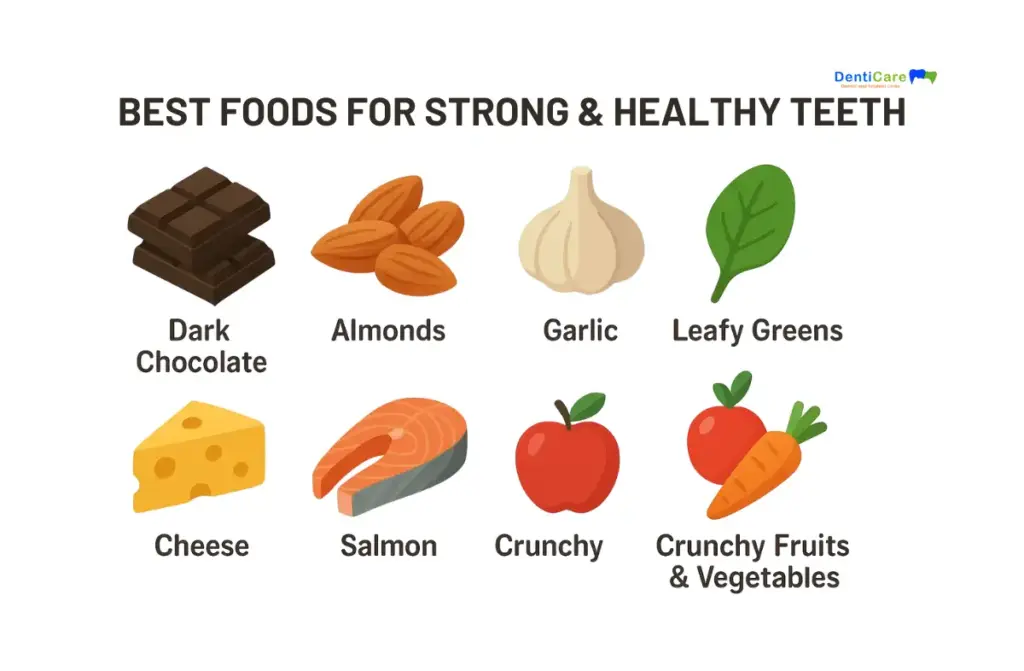
Here are ten of the best food for strong teeth choices that are backed by dental research and easy to work into an everyday Indian diet.
1. Dark Chocolate
Dark chocolate with 70% or higher cocoa content can genuinely support oral health.
- Theobromine, a natural compound in cocoa, has been shown to help harden enamel and reduce sensitivity.
- Polyphenols in cocoa reduce cavity-causing bacteria and help keep mouth acidity in check.
2. Almonds
A crunchy, protein-rich snack loaded with calcium and magnesium.
- Supports enamel strength and jawbone density.
- Chewing almonds stimulates saliva flow, which helps wash away acids and food debris.
3. Garlic
An underrated natural defender against oral infection.
- Allicin, garlic’s active compound, fights bacteria linked to decay and gum disease.
- Its anti-inflammatory properties help gum tissue stay resilient.
4. Leafy Greens
Spinach, kale, and chard aren’t just good for your body — they’re genuine oral protectors.
- Rich in calcium and folic acid, which help rebuild enamel and support gum tissue healing.
- Their fibrous texture scrubs the tooth surface and increases saliva production while you chew.
5. Cheese
One of the most effective, everyday choices for a stronger smile.
- Calcium and phosphate help remineralize enamel and maintain jaw bone strength.
- Chewing cheese increases saliva flow, which neutralizes the acids that cause cavities.
6. Salmon
An excellent source of vitamin D, which is essential for calcium absorption.
- Boosts your body’s ability to use calcium for enamel reinforcement.
- Omega-3 fatty acids help reduce gum inflammation.
7. Crunchy Fruits and Vegetables
Apples, carrots, and celery act like nature’s toothbrush.
- Their fibrous texture physically scrubs away surface plaque as you chew.
- Vitamin C in these foods supports gum tissue repair and reduces bleeding.
8. Strawberries
A genuinely tooth-friendly treat, in moderation.
- Vitamin C fuels collagen production in the gums.
- Malic acid gently helps lift surface stains from enamel.
9. Unsweetened Yogurt
A probiotic-rich protector for your whole mouth.
- Good bacteria help balance the oral microbiome and crowd out harmful strains.
- High calcium content strengthens enamel and supports bone density.
10. Green and Black Tea
A smart daily habit for long-term protection.
- Polyphenols in tea curb harmful bacteria and slow plaque growth.
- Natural fluoride content in tea helps reinforce enamel against decay.
Other Benefits You Get From Eating Foods for Strong Teeth
Good nutrition for your mouth pays off well beyond your smile:
- Enhances Digestion. Chewing crunchy, fibrous foods boosts saliva flow — the very first step of digestion. Saliva contains enzymes that begin breaking down starches and fats before food even reaches your stomach, so strong teeth make the entire digestive process more efficient.
- Supports Stronger Bones. Calcium-rich choices like yogurt, cheese, and leafy greens don’t just reinforce enamel — they support bone density throughout your body, including your jawbone, which reduces long-term risk of tooth loss.
- Prevents Bad Breath. Fibrous fruits and vegetables naturally scrub away the bacteria and food particles that cause odor, while also stimulating the saliva that neutralizes acids. Reaching for good food for strong teeth, like cucumbers, apples, and spinach, keeps your mouth fresher without relying on chemical mouthwashes.
- Improves Immune Function. Nutrients like vitamin C, zinc, and antioxidants strengthen your body’s natural defenses, protecting oral tissue from infection and helping fight inflammation throughout your gums and mouth.
- Boosts Confidence and Appearance. A well-nourished mouth simply looks healthier — brighter, firmer gums and stronger enamel show. When your diet supports your oral health, that shows up in your smile and your confidence.
How Does Food Impact Your Teeth?
Understanding the mechanics behind healthy food for strong teeth helps explain why nutrition matters so much for long-term dental health.
- Strengthens Enamel. Calcium and phosphorus, found in dairy, almonds, and leafy greens, are the two minerals your enamel relies on most. Regular intake helps repair microscopic daily wear before it becomes a bigger problem.
- Protects Gums. Vitamin C from oranges, kiwis, and bell peppers boosts collagen production, reduces inflammation, and speeds up healing of gum tissue — directly lowering your risk of gingivitis.
- Neutralizes Acids. Crunchy produce stimulates saliva, which buffers the acids bacteria produce after you eat sugar, slowing enamel erosion before it starts.
- Improves Mineral Uptake. Phosphorus from fish, eggs, and lean meat helps your body absorb calcium more effectively. Together, they form hydroxyapatite — the mineral structure that makes up your teeth.
- Prevents Plaque Buildup. High-fiber foods act as a natural scrubbing agent while you chew, reducing plaque accumulation between brushings.
- Boosts Saliva Production. Fibrous foods and sugar-free gum increase saliva flow, which continuously bathes your teeth in protective minerals and enzymes.
- Reduces Tooth Sensitivity. Potassium and magnesium, found in bananas, avocados, and nuts, help calm nerve endings inside the tooth, easing sensitivity to hot and cold.
Food and Dental Care Work Together
Diet and dental care are closely linked — everyday eating habits directly influence enamel strength, gum health, and long-term comfort. A balanced diet rich in food for strong teeth and bones supplies the calcium, phosphorus, and vitamin D your teeth and jaw need for structural support. At the same time, favoring fiber and limiting refined sugar helps control acid production, lowering your risk of decay and sensitivity.
- Supports enamel formation and repair. Nutrient-dense meals maintain the mineral balance enamel needs to stay resilient. Choosing food for strong teeth and gums also supports healthier soft tissue and reduces irritation from plaque buildup.
- Reduces the impact of acids and sugars. Whole foods stimulate saliva flow, which naturally buffers acid after eating — a protective effect that compounds when meals consistently include foods for strong teeth rather than processed snacks.
- Promotes overall oral balance. Vitamins A, C, and K support healthy gums and tissue repair, helping your mouth defend itself against common dental problems over time.
4 Ways Drinking Water Improves Your Smile
Hydration plays a bigger role in oral health than most people realize. While brushing and smart eating are essential, water supports and amplifies both.
- Washes away food debris and sugars. Water rinses lingering particles after meals, limiting how long sugars and acids stay in contact with enamel — extending the benefit of every tooth-friendly meal you eat.
- Strengthens enamel through mineral support. In areas with fluoridated water, regular intake reinforces enamel and can slow early decay, working alongside a calcium-rich diet.
- Prevents dry mouth and odor. Proper hydration maintains saliva flow, which controls bacteria growth and keeps breath fresh throughout the day.
- Improves nutrient absorption. Water supports digestion and helps your body absorb the vitamins and minerals from your meals more efficiently, so your diet actually delivers on its dental benefits.
Fruits and Vegetables for a Healthy Smile
Fruits and vegetables are foundational to oral health — they supply essential nutrients while naturally cleaning your teeth as you chew. Many are genuinely calcium rich foods for strong teeth, helping preserve enamel density over time, while their fibrous texture stimulates saliva between brushings.
- Strengthens teeth and jaw structure. Leafy greens, broccoli, and almonds all qualify as food for strong teeth and bones, helping maintain firmness and slow gradual mineral loss.
- Improves gum resilience naturally. Vitamin C–rich produce supports collagen production, keeping gums firm and less prone to bleeding — a simple, healthy food for strong teeth habit anyone can build.
- Encourages smarter snacking. Swapping sugary snacks for fresh produce lowers daily acid exposure. These simple swaps are widely recognized as some of the best food for strong teeth choices for maintaining a naturally balanced, confident smile.
Foods to Avoid for Stronger Teeth
Knowing what to limit is just as important as knowing what to eat. These foods work against everything foods for strong teeth are meant to protect:
- Sugary snacks and candy — feed the bacteria that produce enamel-damaging acid.
- Carbonated and sugary drinks — combine sugar with acidity, a double risk for enamel erosion.
- Sticky or starchy snacks (chips, white bread, dried fruit) — cling to tooth surfaces and are hard to clear with saliva alone.
- Citrus in excess — vitamin C is valuable, but too much citric acid without rinsing can soften enamel over time.
- Ice and hard candy — chewing on these risks cracking enamel and existing fillings.
Moderation, timing meals sensibly, and rinsing with water after acidic or sugary foods go a long way toward protecting your smile.
Conclusion
Your smile is only as strong as the fuel you give it. By consistently choosing foods for strong teeth — rich in calcium, phosphorus, vitamins, and natural antibacterial compounds — you do more than fight cavities. You build enamel strength, gum resilience, and long-term oral wellness. Think of every meal as an investment in your teeth’s future: eat smart, chew well, and stay consistent with professional dental care.
Ready for a personalized dental diet plan? Book a consultation with the team at Denticare Dental & Implant Clinic for a full oral health assessment, professional cleaning, and tailored nutrition guidance for your smile.
Read also: Blood in Saliva.