A beautiful smile enhances your appearance, boosts confidence, and leaves a lasting impression. Whether you’re dealing with crooked teeth, gaps, overcrowding, or bite problems, orthodontic treatment can help restore proper alignment and improve oral health. Today, patients have access to different types of dental braces that suit varying lifestyles, budgets, and cosmetic expectations. From traditional metal options to nearly invisible aligners, choosing the right solution depends on your comfort, treatment goals, and dental condition.
Understanding the different types of dental braces allows you to make informed decisions and avoid unnecessary confusion. This guide explains each option, compares features, discusses affordability, and helps you decide what suits you best. If you are exploring modern orthodontic solutions, learning about the different types of dental braces ensures you receive treatment that aligns with both function and aesthetics.
What Are the Types of Braces?
Braces are orthodontic devices designed to correct misaligned teeth, jaw positioning, and bite problems. They apply gentle pressure over time to move teeth into proper alignment. Thanks to advancements in dentistry, patients now have multiple types of dental braces available, each offering unique advantages.
Common goals of braces include:
- Straightening crooked or crowded teeth
- Closing gaps between teeth
- Correcting overbite, underbite, and crossbite
- Improving chewing and speech function
- Enhancing facial aesthetics and confidence
Choosing among the different types of dental braces depends on age, treatment complexity, appearance preference, and budget considerations.
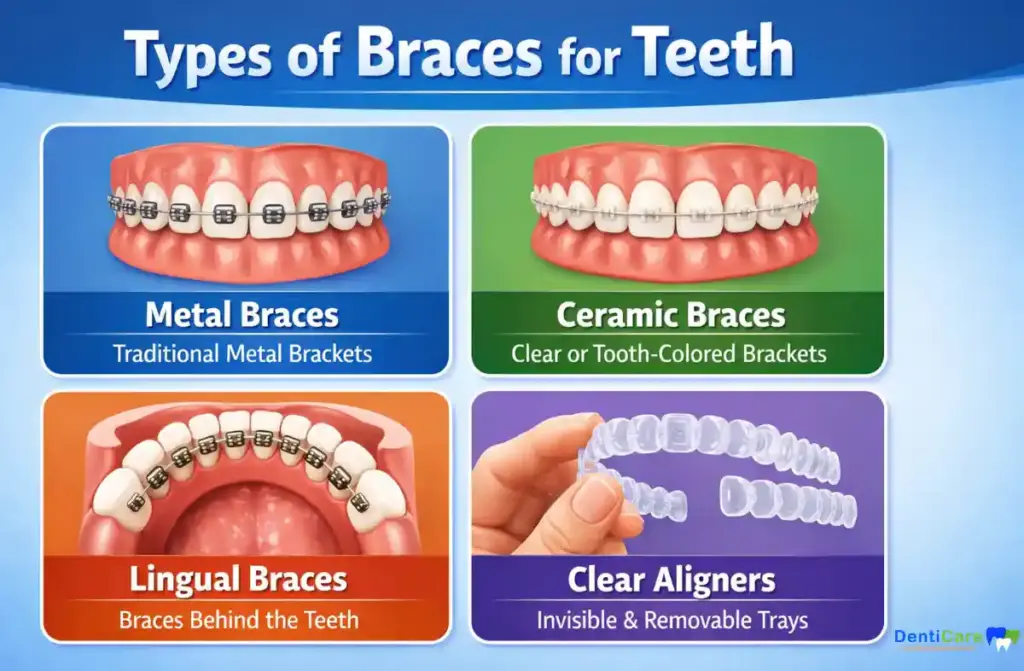
Traditional Metal Braces
Traditional metal braces are the most widely used orthodontic solution. They consist of metal brackets attached to the teeth and connected by wires that gradually shift teeth into position.
Benefits
- Highly effective for complex alignment issues
- Durable and long-lasting
- Often more affordable compared to other options
- Suitable for children, teens, and adults
Limitations
- More visible than other braces
- Can cause minor discomfort initially
- Requires careful cleaning around brackets
Metal braces remain one of the most trusted choices among the different types of dental braces due to their predictable results and cost-effectiveness.
Ceramic Braces
Ceramic braces work like metal braces but use clear or tooth-colored brackets that naturally blend with your teeth.
Benefits
- Less noticeable than metal braces
- Effective for moderate to complex cases
- Aesthetic appeal for professional or social settings
Limitations
- Slightly more expensive than metal braces
- Brackets may stain if not cleaned properly
- Can be more fragile
Ceramic braces are ideal for patients who want the effectiveness of braces without high visibility among the different types of dental braces.
Lingual Braces
Lingual braces are placed behind the teeth, making them completely hidden from view.
Benefits
- Invisible from the front
- Customized for each patient
- Ideal for cosmetic-conscious adults
Limitations
- Higher cost
- Can affect speech temporarily
- Requires skilled orthodontic expertise
- Cleaning can be more challenging
Lingual braces offer maximum discretion while delivering reliable results among the different types of dental braces.
Invisalign
Invisalign uses a series of clear, removable aligners that gradually shift teeth into alignment.
Benefits
- Nearly invisible appearance
- Removable for eating and cleaning
- Comfortable and smooth material
- Fewer clinic visits
Limitations
- Requires discipline to wear 20–22 hours daily
- Not ideal for severe misalignment
- Can be more expensive
Invisalign is especially popular among working professionals and those seeking flexible orthodontic care within the different types of dental braces.
Self-Ligating Braces
Self-ligating braces use special clips instead of elastic bands to hold the wire in place, reducing friction.
Benefits
- Faster tooth movement in some cases
- Less discomfort and fewer adjustments
- Easier cleaning
- Improved efficiency
Limitations
- Slightly higher cost
- Not available in all clinics
These braces combine technology and comfort, making them a growing preference among modern orthodontic patients.
Cost of Different Types of Braces
When evaluating orthodontic treatment, affordability plays a key role. The dental braces types and cost vary based on complexity, clinic location, orthodontist expertise, and treatment duration.
General Cost Influencing Factors
- Severity of alignment problem
- Length of treatment
- Material used (metal, ceramic, aligners)
- Follow-up visits and maintenance
- Additional dental procedures
Patients researching the types of dental braces and cost should focus on value rather than just upfront pricing. Some clinics offer EMI plans, bundled packages, and consultation discounts.
Understanding dental braces types and cost allows patients to choose solutions that balance affordability and quality care.
Comparing Different Types of Braces
Here’s a simplified comparison to help you decide:
Visibility
- Metal: Highly visible
- Ceramic: Semi-visible
- Lingual: Invisible
- Invisalign: Nearly invisible
Comfort
- Metal & Ceramic: Initial discomfort
- Lingual: Tongue irritation initially
- Invisalign: Smooth and comfortable
Maintenance
- Metal/Ceramic: Requires careful brushing
- Lingual: Needs specialized cleaning
- Invisalign: Easy to remove and clean
Treatment Duration
- Metal: Effective for complex cases
- Ceramic: Similar to metal
- Lingual: Moderate duration
- Invisalign: Depends on compliance
This comparison simplifies how the different types of dental braces perform across lifestyle needs.
Factors to Consider Before Choosing the Right Type of Braces for You
Before selecting from the different types of dental braces, consider the following:
- Age and lifestyle: Working professionals may prefer discreet solutions, especially among the types of dental braces for adults.
- Severity of alignment issues: Complex cases may need fixed braces.
- Budget planning: Compare affordability and long-term value.
- Comfort level: Sensitivity and tolerance vary.
- Maintenance habits: Some braces require more cleaning effort.
- Treatment duration: Faster options may cost more.
Patients exploring types of dental braces for adults often prioritize aesthetics, comfort, and minimal lifestyle disruption.
Ready to Start Your Journey to a Straighter Smile?
Choosing the right orthodontic treatment can significantly improve oral health, confidence, and overall quality of life. With advancements in technology, the different types of dental braces now cater to every age group and dental condition.
A professional consultation helps determine the best option based on bite alignment, jaw structure, and cosmetic goals. Early evaluation leads to better outcomes and shorter treatment timelines.
If you are ready to invest in a healthier smile, speak with a qualified orthodontist today and explore the different types of dental braces best suited for your needs.
Conclusion
Selecting the right orthodontic solution requires understanding your goals, comfort preferences, and budget. Whether you choose metal braces, ceramic brackets, lingual systems, or aligners, each option offers unique advantages. Learning about the different types of dental braces empowers you to make informed decisions and achieve long-lasting dental health.
By evaluating treatment needs, comparing benefits, and understanding the types of dental braces and cost, patients can confidently begin their orthodontic journey. With expert guidance and proper care, achieving a beautiful, aligned smile becomes an attainable goal for everyone.
Read also When Should a Child Get Braces.