Missing teeth can affect more than just your smile. They may impact your confidence, speech, chewing ability, and overall oral health. Modern dentistry offers several solutions for replacing missing teeth, but dental implants have become one of the most reliable and long lasting options available today. A dental implant procedure is designed to replace missing tooth roots with strong titanium implants that support artificial teeth. Unlike removable dentures, implants provide a stable and natural looking solution that closely mimics real teeth.
In this guide, Denticare Dental and Implant Clinic explains everything you need to know about the dental implant process, recovery, benefits, risks, and aftercare so you can make an informed decision about your oral health.
What is a Dental Implant?
A dental implant is an artificial tooth root made from biocompatible titanium material. It is surgically placed into the jawbone to support a crown, bridge, or denture.
A dental implant is made up of several essential components that work together to replace a missing tooth effectively:
- Implant post placed inside the jawbone
- Abutment connecting the implant and crown
- A custom made crown designed to restore the appearance and function of a natural tooth
The dental implant procedure restores missing teeth by creating a secure foundation for replacement teeth. Once healed, implants blend naturally with surrounding teeth and provide excellent stability.
Implant Brands/Systems Used
Implant Systems We Use
Denticare Dental and Implant Clinic offers implants from globally trusted systems, including:
- Straumann Implants — known for high success rates and Swiss precision engineering.
- Zirconia Implants — a metal-free option for patients seeking a tooth-colored, biocompatible alternative to titanium.
Your dentist will recommend the most suitable implant system based on your bone quality, aesthetic goals, and budget.
Benefits of Dental Implant Procedure
- Natural Appearance: Dental implants are custom made to closely match the appearance, feel, and function of natural teeth. The crowns are customized to match the color and shape of your natural smile.
- Improved Chewing and Speech: Missing teeth or loose dentures may make eating and speaking difficult. Implants improve bite strength and help patients speak more clearly.
- Jawbone Preservation: When a tooth is lost, the jawbone may begin to shrink over time. A dental implant procedure stimulates the bone and helps maintain facial structure.
- Long Term Durability: With proper oral hygiene and regular dental care, dental implants can provide strong, reliable function for many years. They are considered one of the most durable tooth replacement options available.
Types of Dental Implants
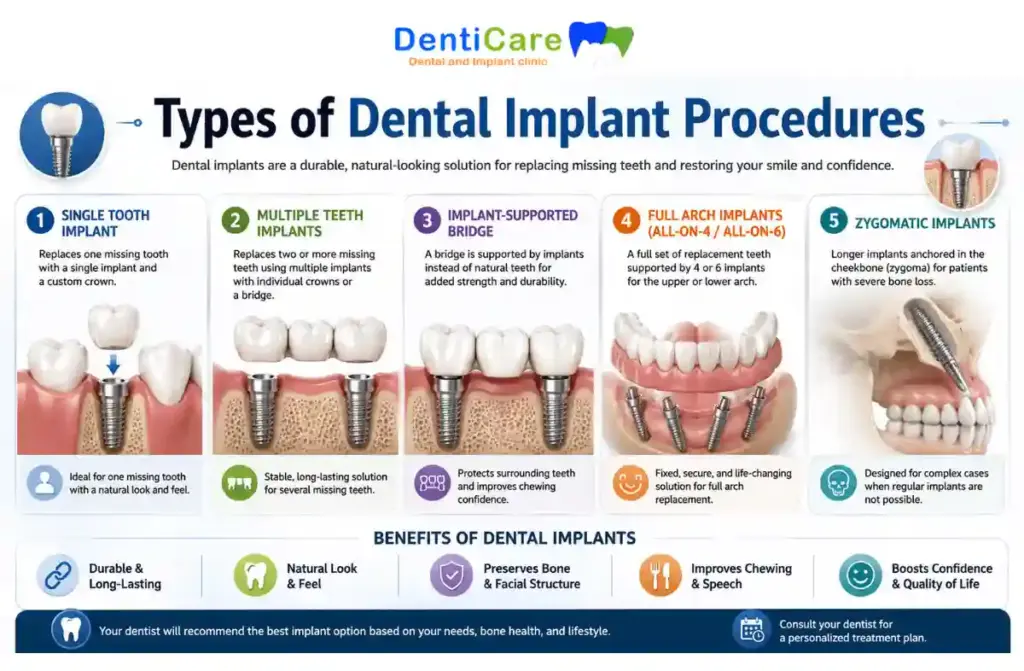
- Endosteal Implants: These are the most widely used type of dental implants and are surgically placed into the jawbone to support replacement teeth.
- Subperiosteal Implants: These implants are positioned under the gum but above the jawbone and may be suitable for patients with limited bone volume.
- Single Tooth Implants: Used to replace one missing tooth without affecting neighboring teeth.
- Full Mouth Dental Implants: Designed for patients missing multiple teeth or an entire dental arch.
- All on 4 Implants: This technique uses four implants to support a full set of replacement teeth.
Different patients may require different dental implant procedure steps depending on their oral condition and treatment goals.
Are you a Candidate for Dental Implants?
Most healthy adults can benefit from dental implants. However, certain factors determine whether treatment will be successful.
- Ideal Age and Oral Health: Patients should have fully developed jawbones and healthy gums before undergoing implant treatment.
- Bone Density Requirements: Adequate jawbone density is essential for supporting implants. Some patients may require a procedure for bone grafting for dental implants before implant placement.
- Medical Conditions that may affect Treatment: Conditions such as uncontrolled diabetes, immune disorders, or severe gum disease may affect healing.
- Smoking and Implant Success: Smoking can slow healing and increase the risk of implant failure. Dentists often recommend quitting smoking before beginning the dental implant procedure.
Who Should NOT Get Dental Implants
When Dental Implants May Not Be Recommended
While most healthy adults are good candidates, implants may not be suitable for:
- Growing children and teenagers whose jawbone is still developing
- Patients with uncontrolled diabetes or untreated periodontal (gum) disease
- Patients on certain bisphosphonate medications (used for osteoporosis) without medical clearance
- Heavy smokers who are unwilling to reduce or pause smoking around surgery
- Patients with insufficient bone density who decline bone grafting
- Patients undergoing radiation therapy to the head or neck
A thorough medical and dental evaluation during the initial consultation helps determine candidacy on a case-by-case basis.
Dental Implant Procedure Step by Step
Understanding the treatment stages helps patients feel more comfortable and prepared.
- Initial Consultation: The dentist evaluates your oral health, discusses treatment goals, and develops a personalized treatment plan.
- X Rays and Scans: Digital Xrays and 3D scans help assess bone density and determine implant placement accuracy.
- Tooth Extraction (if needed): Damaged teeth may need removal before implants are placed. In some cases, a dental implant procedure after tooth extraction can be performed immediately.
- Bone Grafting: Patients with insufficient jawbone may require grafting to strengthen the implant site.
- Implant Placement Surgery: During the dental implant surgery procedure, the implant post is surgically inserted into the jawbone under local anaesthesia.
- Healing and Osseointegration: Over the next few months, the implant fuses naturally with the jawbone through a process called osseointegration.
- Abutment Placement: After the healing process is complete, the abutment is securely connected to the dental implant to support the final crown.
- Crown Placement: A custom made crown is secured onto the abutment to complete the restoration.
These carefully planned dental implant procedure steps help ensure long term stability and success.
What Does a Dental Implant Procedure Involve
The complexity of treatment depends on the number of implants required and the patient’s oral condition.
- Duration of Procedure: A single implant surgery may take about one to two hours, while full mouth restorations may require multiple visits.
- Anaesthesia options: Most procedures are performed under local anaesthesia. Sedation options may also be available for anxious patients.
- Number of appointments Required: The complete dental implant procedure usually involves several appointments spread over a few months to allow proper healing.
Is the Dental Implant Procedure Painful
Many patients worry about discomfort, but implant treatment is generally well tolerated.
- During Surgery: Local anaesthesia numbs the treatment area, so patients usually experience minimal pain during the procedure.
- After Surgery: Mild swelling, soreness, and bruising are common for a few days after treatment.
- Pain Management and Recovery Tips: Dentists may recommend pain medication, cold compresses, and soft foods during recovery after the dental implant surgery procedure.
How Can I Prepare for a Dental Implant Procedure
Proper preparation helps improve healing and treatment success.
- Oral Hygiene Preparation: Patients should maintain excellent oral hygiene before surgery.
- Medical Evaluation: Your dentist may review medications and medical history before beginning the dental implant procedure.
- Foods to Avoid: Avoid alcohol, smoking, and hard foods before surgery.
- Pre Surgery Instructions: Patients may receive fasting instructions if sedation is planned.
How Soon will I Recover
Recovery time varies from patient to patient.
- Healing Timeline: Most people recover from surgery within a few days, but complete bone healing may take several months.
- Swelling and Discomfort: Mild discomfort usually improves within the first week.
- Returning to Normal Activities: Many patients return to work within one or two days after the dental implant procedure.
Possible Risks and Complications
Dental implants have high success rates, but complications can occasionally occur.
- Infection: Poor oral hygiene may increase infection risk around the implant site.
- Implant Failure: In rare cases, implants may fail to integrate with the bone.
- Nerve Damage: Improper implant placement may affect nearby nerves.
- Sinus Complications: Upper jaw implants placed near the sinus area may occasionally cause sinus related issues.
- How Dentists Minimize Risks: Careful planning, advanced imaging, and experienced surgeons greatly reduce complications during the dental implant surgery procedure.
In certain situations, a dental implant removal procedure may be necessary if an implant fails or develops complications.
Dental Implant Procedure Aftercare
Good aftercare is essential for long term implant success.
- Oral Hygiene Tips: Brush and floss regularly to prevent gum disease around implants.
- Foods to Eat and Avoid: Choose soft foods during initial healing and avoid very hard or sticky foods.
- Follow up Appointments: Routine check ups help monitor healing progress after the dental implant procedure.
- Long Term Maintenance: Professional cleanings and proper home care help implants remain healthy for many years.
How long Do Dental Implants Last?
Dental implants are known for their longevity.
- Implant Lifespan: With proper care, implants can last 15 years or longer, and many last a lifetime.
- Factors affecting Durability: Smoking, poor oral hygiene, teeth grinding, and medical conditions may affect implant lifespan.
- Importance of Regular Dental Visits: Regular dental examinations help identify problems early and protect implant health after the dental implant procedure.
Alternatives to Dental Implants
While implants are highly effective, some patients may explore alternative treatments.
- Dental Bridges: Bridges replace missing teeth by using neighboring teeth for support.
- Dentures: Removable dentures provide an affordable solution for multiple missing teeth.
- Implant Supported Dentures: These combine the stability of implants with the coverage of dentures.
Implants vs. Bridges vs. Dentures
| Factor | Dental Implants | Dental Bridges | Dentures |
| Lifespan | 15–25+ years | 10–15 years | 5–8 years |
| Bone preservation | Yes — stimulates jawbone | No | No |
| Affects neighboring teeth | No | Yes — teeth are filed down | No |
| Look and feel | Closest to natural teeth | Natural-looking | Can feel bulky |
| Removable | No | No | Yes |
| Initial cost | Higher | Moderate | Lowest |
| Long-term cost | Cost-effective over time | Moderate | May need frequent replacement |
| Procedure invasiveness | Surgical | Non-surgical | Non-surgical |
What are the Costs of Dental Implants
The dental implant procedure cost varies depending on several factors.
- Factors Affecting Cost: The number of implants, type of restoration, and need for additional procedures can influence pricing.
- Single vs Full Mouth Implants: Single tooth implants are generally less expensive than full mouth restorations.
- Additional Procedure Costs: Bone grafting, sinus lifts, and extractions may increase the overall dental implant procedure cost.
- Why Implants are a Long Term Investment: Although implants may initially cost more than dentures or bridges, they often last longer and require fewer replacements.
The total dental implant procedure time may also affect treatment planning and cost depending on the complexity of the case.
Dental Implant Cost in Chennai
| Treatment | Approximate Price Range (INR) |
| Single tooth implant (implant + abutment + crown) | ₹25,000 – ₹45,000 |
| Premium implant systems (e.g., Straumann, Nobel Biocare) | ₹45,000 – ₹75,000 |
| Bone grafting (per site) | ₹8,000 – ₹20,000 |
| Sinus lift | ₹15,000 – ₹30,000 |
| All-on-4 (per arch) | ₹1,80,000 – ₹3,50,000 |
| Full mouth implants (per arch, All-on-6) | ₹2,50,000 – ₹4,50,000 |
Dental Implant Procedure Follow Up
Regular follow up care is important for maintaining implant health.
- Regular Monitoring: Dentists examine the implant and surrounding tissues during check ups.
- Professional Cleanings: Routine cleanings help remove plaque and maintain healthy gums.
- Signs to Watch For: Pain, swelling, looseness, or bleeding around implants should be evaluated immediately after a dental implant procedure.
Conclusion
Dental implants offer a durable, natural looking, and highly effective solution for replacing missing teeth. From restoring chewing ability to preserving jawbone health, the benefits of implant treatment can significantly improve quality of life. Choosing an experienced dental team is essential for achieving successful results and minimizing complications. At Denticare Dental and Implant Clinic, our skilled professionals use advanced technology and personalized treatment planning to provide safe and comfortable implant care. Book your consultation today and discover how a customized dental implant procedure can restore your smile and confidence.
Denticare Dental and Implant Clinic is located in Chennai and has helped hundreds of patients restore their smiles with safe, technology-driven implant treatment. Visit our clinic for a personalized consultation and CBCT-guided treatment plan tailored to your needs.