

Medically Reviewed by Dr. Gnanaraj, BDS, MMC Chennai, PG Clinical Dentistry (Melbourne)
Principal Dentist, Denticare Dental & Implant Clinic
ASID Certified – Australian Society of Implant Dentistry
20+ years of clinical expertise in delivering advanced, patient-centered dental care
Brushing twice a day is a good start, but real dental care is a lifelong habit that changes as your family grows — from a toddler’s first tooth to a grandparent’s daily denture care. At Denticare, we see the same pattern in almost every family we treat: the households with the fewest cavities and gum problems aren’t the ones with the fanciest routines, they’re the ones with the most consistent ones.
This guide walks through ten practical Dental Care Tips for Families, how oral care needs shift across different life stages, the mistakes we see most often in the clinic, and answers to the questions parents ask us most.
Why Family Dental Habits Matter More Than Individual Effort
Oral health isn’t just personal — it’s shared. Children copy what they see at home, and parents who skip flossing rarely have kids who floss either. Studies on oral health behavior consistently show that household routines, not individual willpower, are the strongest predictor of long-term dental outcomes. That’s why the most effective dental care tips for families are framed around the household as a whole, rather than the individual — a shared routine is easier to maintain than ten separate ones.
How to Build Better Dental Care Habits at Home
A healthy smile doesn’t start at the dental chair — it starts at your bathroom sink. None of these dental care tips for families require extra time or expensive products. They just require repetition.
Start Brushing the Moment the First Tooth Appears
As soon as an infant’s first tooth erupts — usually between 6 and 10 months — it’s time to start gentle brushing with a rice-grain smear of fluoride toothpaste. Waiting until a child has a “full set” of teeth is one of the most common mistakes we see. Early plaque buildup on baby teeth can affect the alignment and health of the permanent teeth developing underneath, and it also normalizes brushing as part of the daily routine before a toddler is old enough to resist it.
Set a Family Brushing Schedule
Brushing at the same times each day — right after breakfast and right before bed — turns oral care into a habit instead of a chore. Families who brush together, even briefly, tend to reinforce the routine in younger kids far better than reminders alone. If mornings are rushed, anchor brushing to an existing habit, like right after getting dressed, so it doesn’t get skipped when the schedule slips.
Choose a Soft-Bristled Brush for Every Age
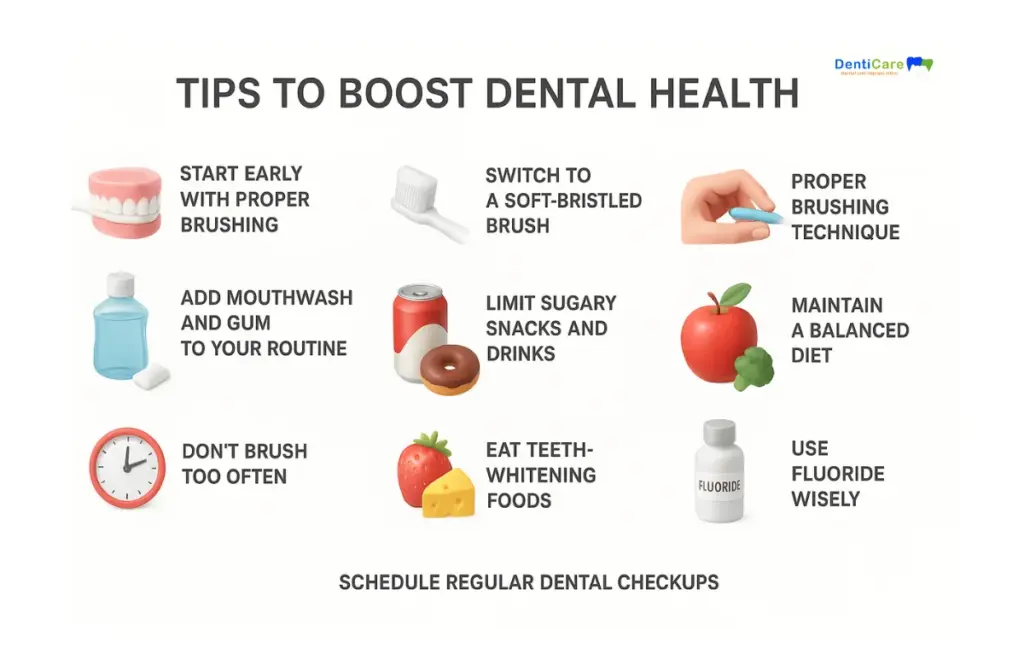
Medium and hard bristles feel more “thorough,” but they wear down enamel and irritate gums over time, particularly along the gumline where recession often starts. A soft-bristled brush, replaced every three months, removes plaque just as effectively without the damage — for toddlers, teenagers, and grandparents alike. Electric brushes with soft heads are a reasonable upgrade for kids who struggle with technique, since the brush does more of the work.
Brush with Technique, Not Just Time
Two minutes of brushing only helps if the technique is right. Use small, circular motions at a 45-degree angle along the gumline, rather than aggressive back-and-forth scrubbing, which can wear a groove into enamel over the years. For kids, a two-minute song or a brushing timer app works better than reminders shouted from the hallway — and it removes the guesswork of “was that two minutes or thirty seconds?”
Use Fluoride Toothpaste — But Get the Dose Right
Fluoride remains one of the most effective tools against tooth decay because it helps remineralize enamel before a cavity can form. A pea-sized amount is right for anyone over age 3; for children under 3, a smear the size of a grain of rice is enough. Too little reduces protection, and too much — in young children who tend to swallow toothpaste instead of spitting it out — can cause dental fluorosis, a cosmetic mottling of the enamel. Dosage matters more than most parents realize, and it’s worth supervising brushing until a child reliably spits rather than swallows.
Floss Daily, Not Just Before Dentist Visits
Brushing alone misses roughly a third of your tooth surfaces — the tight spaces between teeth where a brush simply can’t reach. Flossing once a day, ideally at night, clears out trapped food before it turns into plaque and eventually tartar, which only a dental cleaning can remove. It takes under a minute once it becomes routine, and floss picks or water flossers are a reasonable alternative for kids or anyone with limited dexterity.
Add Mouthwash and Sugar-Free Gum Between Meals
An alcohol-free antibacterial mouthwash can reduce bacteria in places brushing misses, and sugar-free gum containing xylitol stimulates saliva production, which naturally neutralizes the acid left behind after meals. Neither replaces brushing or flossing, but both are useful additions for the hours in between — especially for teenagers who snack frequently or for anyone who eats lunch away from home.
Cut Back on Sugary Snacks and Increase Water Intake
Sugar doesn’t damage teeth directly — the acid produced by oral bacteria feeding on sugar does. Swapping sticky, sugary snacks for water, apples, carrots, or plain yogurt reduces that acid exposure significantly, especially in kids’ school lunchboxes where sticky, slow-dissolving sweets do the most damage. Water also helps rinse away food particles between brushings, which is why we recommend it over juice or flavored drinks throughout the day.
Support Enamel with a Balanced Diet
Calcium, vitamin D, and phosphorus are the building blocks of strong enamel. Dairy, leafy greens, nuts, and fish support this from the inside, complementing whatever preventive care your dentist provides in the chair. Diet is often the most overlooked part of a “dental” routine, largely because its effects build up slowly and aren’t as visible as brushing or flossing.
Replace Toothbrushes and Book Regular Checkups
Frayed bristles clean far less effectively, so swap toothbrushes every three months — sooner after an illness, since bacteria can linger on the bristles. Pair that with a dental checkup every six months for professional cleaning and early detection of issues you won’t notice at home, such as small cavities, early gum inflammation, or enamel wear from grinding. Many of the problems we treat at Denticare could have been resolved far more simply if caught a few months earlier.
Dental Care Tips by Age Group
Oral care isn’t one-size-fits-all. Here’s how the priorities shift across a family’s different life stages.
Toddlers (0–3 years)
Focus on establishing the habit itself rather than perfect technique — a parent should do the actual brushing until a child has the coordination to do it well, usually around age 6 or 7. Sealants aren’t typically needed yet, but the first dental visit should happen by the first birthday or within six months of the first tooth appearing, whichever comes first.
School-Age Children (4–12 years)
This is the window where cavities are most common, largely due to snacking habits and inconsistent supervision of brushing. Fissure sealants — a thin protective coating applied to the chewing surfaces of molars — are especially effective here, since that’s where most childhood cavities form. Back-to-school season is also a practical time to schedule a checkup before the term gets busy, since gaps in routine tend to open up once school starts.
Teenagers (13–19 years)
Braces, sports, and increasingly independent snacking habits make this a higher-risk period. Mouthguards are worth discussing if your teen plays contact sports, and it’s worth having a direct conversation about sugary drinks and vaping, both of which affect oral health more than most teens realize.
Adults (20–59 years)
Gum disease becomes the primary concern in this range, often silently, since early gum disease rarely causes pain. Stress-related teeth grinding, coffee and tobacco staining, and missed checkups due to busy schedules are common patterns we see. A six-month cleaning schedule matters just as much here as it does for kids, even without visible problems.
Seniors (60+ years)
Dry mouth from medications, receding gums, and denture or implant care become the priorities. Seniors are also at higher risk for root decay, since exposed root surfaces lack the enamel protection of the crown. Regular checkups matter even more at this stage, since many age-related issues progress quietly.
Common Mistakes That Undermine Good Dental Care Tips for Families
- Brushing too hard, thinking it cleans better. It wears enamel and irritates gums instead.
- Skipping the dentist until something hurts. Pain usually means the problem is already advanced.
- Treating flossing as optional. It isn’t — most cavities between teeth start exactly where a brush can’t reach.
- Assuming baby teeth “don’t matter” since they fall out anyway. Untreated decay in baby teeth can affect the permanent teeth forming beneath them.
- Rinsing with water immediately after brushing. This washes away the fluoride before it can work; spit, don’t rinse.
Conclusion
Good dental care is a family habit, not a one-person job. Brushing technique, flossing, diet, and regular checkups work together — miss one and the others have to work harder to compensate. These Dental Care Tips for Families work best when you start with whichever habit your household struggles with most, build consistency there first, and layer in the rest over time as it becomes routine.
If you’re due for a checkup or want a routine built around your family’s specific needs — including pediatric dentistry, fissure sealants, or fluoride treatments — our team at Denticare is here to help. Book an appointment or explore our General Dentistry and Pediatric Dentistry services.
Related reading: Veneers vs. Crowns: Which Cosmetic Fix Is Right for You? | When Should a Child Get Braces