
As a parent, one of the most common questions is, “When should a child get braces?” Deciding the right age for orthodontic treatment is crucial for ensuring healthy teeth alignment and a confident smile. With advances in dental technology, braces are no longer only for teenagers—early evaluations can prevent complex dental problems later. Understanding the right timing, treatment options, and expected outcomes can help you make informed decisions for your child’s dental health.
At What Age Should Children Start Orthodontic Treatment?
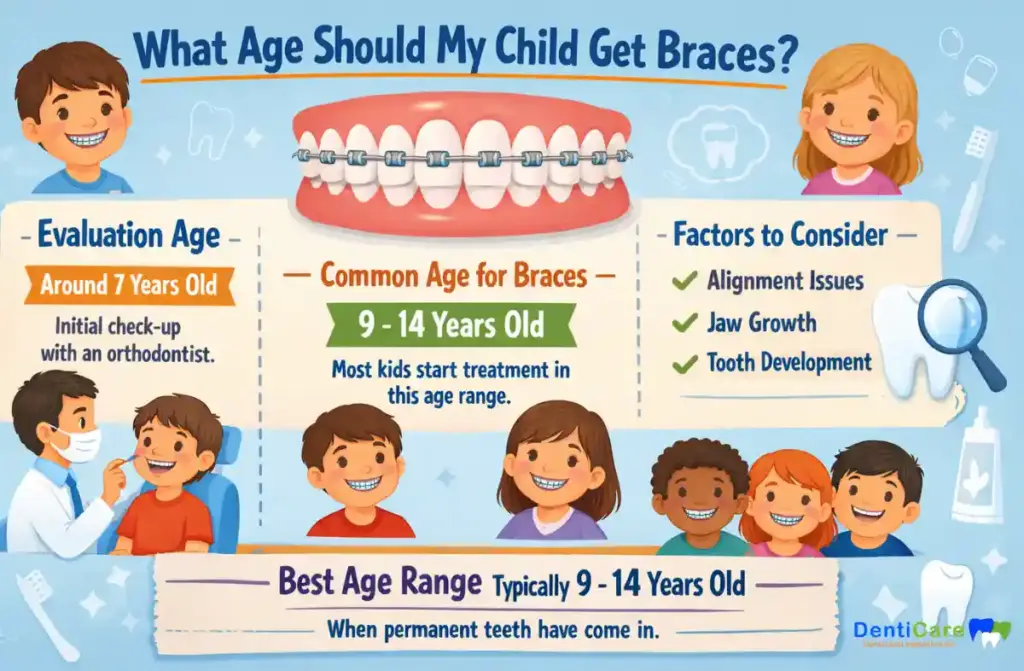
Orthodontists recommend that children have their first evaluation around age 7, when permanent teeth start to emerge. This doesn’t always mean braces are applied immediately, but it helps identify issues like:
- Misaligned teeth
- Crowding or spacing problems
- Bite irregularities
- Jaw growth issues
Starting treatment at the right time ensures less invasive procedures and better long-term results. Parents often wonder, “When should a child get braces?” The answer depends on your child’s dental development, but early detection is key. The best age for braces in kids is usually between 9 and 14 years, though some cases may require intervention earlier or later.
Isn’t 7 Years of Age Too Soon for Braces?
Many parents worry that age 7 is too early. At this stage, orthodontists typically perform an evaluation, not full treatment. The purpose is to monitor your child’s child teeth alignment age and anticipate potential orthodontic problems.
Early evaluations allow your orthodontist to:
- Detect bite issues
- Prevent future crowding
- Plan for corrective treatment in the most effective way
So, while braces themselves are rarely applied at age 7, assessing your child at this stage ensures timely intervention and reduces the complexity of later procedures.
How Young Can Kids Start Braces?
Children can start braces as early as age 7–8 in special cases, particularly when dental issues are noticeable. Early treatment, also called interceptive orthodontics, addresses problems like:
- Severe crowding
- Crossbite or overbite
- Thumb-sucking related teeth misalignment
Parents often ask, “When should a child get braces?” The answer varies, but orthodontists emphasize starting only when necessary. Braces for children before 13 are common for most mild to moderate misalignments, ensuring better results before jaw growth completes.
Our Youngest Braces Patients
Orthodontists have treated children as young as 6 years old when serious dental concerns are present. Some examples include:
- Children with early bite issues that could worsen with age
- Kids with significant spacing problems
- Those needing painless braces for kids to correct minor misalignments
Early treatment can make the process simpler, shorter, and more comfortable, preventing complicated procedures in adolescence. Parents often find reassurance knowing that treatment plans are tailored to each child’s needs.
Factors Influencing When to Begin Braces Treatment
Several factors determine “when should a child get braces”. Orthodontists consider:
- Bite and jaw alignment: Overbite, underbite, or crossbite
- Tooth crowding: Too many teeth in a small space
- Thumb-sucking or oral habits: Can alter teeth positioning
- Jaw growth patterns: Timing affects treatment type and duration
- Overall oral health: Healthy gums and teeth are essential
Other considerations include:
- Child teeth alignment age
- Growth spurts for maximum effectiveness
- Your child’s comfort and readiness
Parents often ask, “is age 13 too late for braces?” While it’s not too late, earlier intervention usually provides better results and shorter treatment duration.
Types of Braces Available
Modern dentistry offers multiple options to suit children’s needs. Common types include:
- Metal Braces: Durable and effective for most cases
- Ceramic Braces: Less noticeable than metal, ideal for self-conscious teens
- Clear Aligners: Removable, comfortable, and nearly invisible
- Lingual Braces: Hidden behind the teeth for cosmetic appeal
Orthodontists also consider painless braces for kids, which focus on comfort while correcting misalignment efficiently. Parents often wonder “when should a child get braces”, and the type of braces can influence the ideal timing.
What to Expect with Braces
Braces treatment involves several stages:
- Initial consultation: X-rays, dental impressions, and treatment planning
- Braces application: Attaching brackets and wires (generally painless)
- Regular adjustments: Every 4–8 weeks to guide teeth movement
- Oral hygiene: Brushing and flossing are essential to prevent cavities
Parents should set realistic expectations for their child. Braces may feel strange initially, but modern techniques like painless braces for kids make the experience much more comfortable. Understanding the process helps children adapt quickly and reduces anxiety.
How Long Do Braces Take?
The duration of braces depends on the severity of the dental issue and the child’s age. Typical timelines include:
- Mild misalignments: 6–12 months
- Moderate cases: 12–24 months
- Severe cases: 2–3 years
Regular orthodontic visits ensure progress stays on track. Parents often ask “when should a child get braces” to plan ahead for school schedules and activities. Early treatment can sometimes shorten the overall duration, especially when started before age 13.
Conclusion
Deciding “when should a child get braces” requires understanding your child’s dental development, bite alignment, and growth patterns. Early evaluation, around age 7, helps detect potential issues, while most children begin treatment between 9–14 years. Factors like child teeth alignment age, severity of misalignment, and available braces options guide timing and comfort.
Consulting a trusted orthodontist ensures your child receives the most effective, safe, and painless braces for kids, making the journey to a healthy, confident smile smooth and successful. Don’t wait—schedule a consultation today to discuss the best timing for your child’s orthodontic care.