
After a root canal procedure, patients often face questions about recovery and dietary choices. One of the most common queries is what to eat after root canal treatment. Proper diet plays a critical role in protecting the treated tooth, ensuring comfort, and promoting faster healing. Choosing the wrong foods or eating too soon can lead to pain, dislodged temporary fillings, or complications.
Many patients ask, can i eat after a root canal immediately post-procedure. While eating is possible, timing and food choices are essential. Understanding what to eat after root canal therapy helps prevent reinfection, minimizes discomfort, and supports long-term tooth health.
Why Your Diet Matters After a Root Canal
A root canal removes infected pulp from a tooth, leaving it clean and sealed. However, the surrounding tissues need time to recover. Proper dietary management ensures:
- Protection of temporary fillings: Hard or sticky foods can break or dislodge fillings.
- Reduction of sensitivity: Extreme temperatures or acidic foods can irritate nerves.
- Faster healing: Nutrient-rich, soft foods support tissue repair and reduce inflammation.
- Prevention of reinfection: Avoiding harmful foods lowers the risk of bacteria reaching the treated canal.
Patients often ask after root canal treatment what to eat, and focusing on soft, easy-to-chew foods is the safest approach during the first few days.
When to Eat After a Root Canal
Timing is crucial when resuming eating after a root canal. Many patients wonder can i eat after a root canal immediately. It is recommended to wait until the local anesthesia wears off completely, typically 2–4 hours. Eating while numb may cause accidental bites to cheeks, lips, or tongue. After this period, begin with soft foods and chew on the opposite side of the treated tooth.
Patients sometimes ask, can you eat after a root canal without crown. The answer is yes, but avoid biting directly on the treated tooth until the permanent crown is placed. Following guidance on what to eat after root canal therapy ensures comfort, minimizes pain, and protects the tooth from mechanical stress during healing.
What Foods to Eat After a Root Canal
Selecting appropriate foods is key for a smooth recovery. Understanding what to eat after root canal therapy can prevent complications and reduce discomfort.
Soft Foods to Include:
- Lukewarm Soups & Broths: Easy to swallow, hydrating, and gentle on sensitive teeth.
- Boiled or Mashed Vegetables: Carrots, pumpkin, and potatoes provide essential nutrients without requiring chewing.
- Soft Rice Dishes: Curd rice or porridge is filling and easy on the jaw.
- Soft Proteins: Scrambled eggs, paneer, or soft tofu ensure protein intake without chewing strain.
- Oatmeal & Soft Cereals: Nutrient-rich and easily digestible.
- Yogurt & Smoothies: Probiotics support gut health and are gentle on sensitive teeth.
- Soft Fruits: Bananas, steamed apples, and melons are safe, nutritious options.
If you’re researching what to eat after rct, prioritize soft, lukewarm, and minimally processed foods to reduce stress on the treated tooth.
Tips While Eating:
- Always chew on the opposite side of the treated tooth.
- Take small bites to prevent accidental pressure.
- Avoid extreme temperatures (hot or cold).
- Drink fluids slowly to avoid discomfort.
Following these guidelines ensures what to eat after root canal therapy supports proper healing and reduces discomfort.
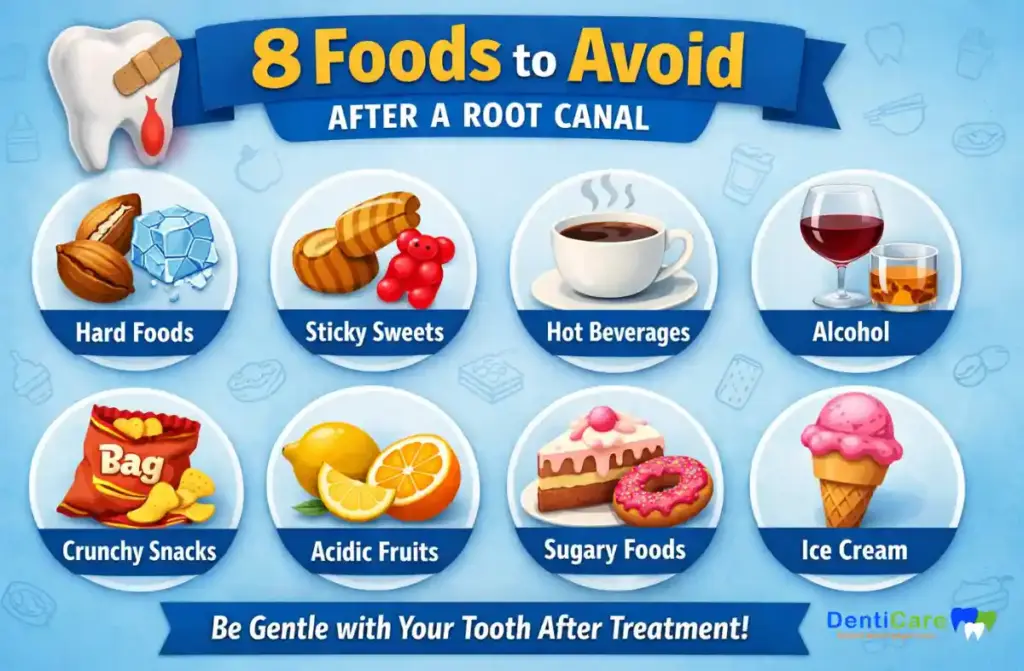
What Foods to Avoid After a Root Canal
Equally important is understanding which foods to avoid to protect the treated tooth and temporary restoration.
Foods to Avoid:
- Hard foods: Nuts, hard bread, chips, and raw vegetables can crack temporary fillings.
- Sticky foods: Caramel, chewing gum, or candies can pull out fillings.
- Very hot beverages or soups: May irritate the treated area.
- Ice-cold drinks: Can trigger sensitivity in newly treated teeth.
- Crunchy snacks: Popcorn and crackers can exert unnecessary pressure.
- Spicy or acidic foods: Tomatoes, citrus fruits, and spicy sauces may irritate gums.
Patients often ask can you eat after a root canal without crown. While possible, avoid chewing on the treated tooth until crown placement. Similarly, after root canal what to eat should avoid sticky, crunchy, or very hot/cold foods to ensure proper recovery.
Post-Procedure Timeline Guidance
Understanding what to eat after root canal therapy also involves following a recovery timeline:
First 24 Hours:
- Stick to soft, lukewarm foods.
- Avoid chewing on the treated tooth.
- Limit acidic and spicy foods.
48 Hours Post-Treatment:
- Gradually reintroduce semi-soft foods.
- Continue to avoid hard, sticky, or crunchy items.
- Maintain oral hygiene gently.
1 Week and Beyond:
- Once the permanent crown is placed, normal foods can be reintroduced.
- Continue to avoid extreme temperatures if sensitivity persists.
- Attend follow-up appointments to monitor healing.
Following this timeline ensures optimal healing and comfort while reducing the risk of complications.
Other Post-Procedure Best Practices
In addition to knowing what to eat after root canal, these best practices can support recovery:
- Chew on the opposite side: Protects the treated tooth.
- Maintain oral hygiene: Use a soft-bristled toothbrush and gentle brushing.
- Take prescribed medications: Antibiotics or painkillers reduce infection and discomfort.
- Rinse with warm salt water: Reduces swelling and promotes healing.
- Avoid biting hard objects: Pens, fingernails, or hard snacks may damage the tooth.
- Attend follow-ups: Ensure proper placement of permanent restoration.
Patients often search after root canal treatment what to eat, but integrating these best practices alongside a proper diet ensures better long-term outcomes.
Root Canal Treatment Aftercare
Effective aftercare combines diet, hygiene, and careful observation. Beyond choosing what to eat after root canal, patients should:
- Monitor for swelling or unusual pain.
- Avoid chewing directly on the treated tooth.
- Complete prescribed medications.
- Follow dentist’s recommendations regarding crowns or restorations.
Patients frequently ask after root canal what to eat because dietary habits directly influence tooth protection and healing. A well-managed diet combined with proper aftercare prevents complications and improves treatment success.
When to Call Your Dentist
Even with proper dietary care, certain symptoms require immediate attention:
- Persistent or severe pain beyond 72 hours
- Swelling of the gums or face
- Fever or general malaise
- Cracked or dislodged temporary filling
- Difficulty chewing or biting
Understanding what to eat after root canal is important, but timely professional intervention ensures long-term success and prevents reinfection.
Conclusion
Proper dietary choices are crucial for a smooth and comfortable recovery after a root canal. Knowing what to eat after root canal reduces pain, protects temporary fillings, and promotes faster healing. Soft, lukewarm, and nutrient-rich foods are ideal, while hard, sticky, or extreme-temperature foods should be avoided.
If you’re still unsure what to eat after rct or after root canal what to eat, consult your dentist. Following these dietary and post-procedure guidelines ensures a safe recovery and long-term dental health. By taking the right steps, you can protect your tooth, avoid complications, and enjoy a smooth healing process.
Read also Are Dental Implants Painful.