
Medically Reviewed by Dr. Gnanaraj, BDS, MMC Chennai, PG Clinical Dentistry (Melbourne)
Principal Dentist, Denticare Dental & Implant Clinic
ASID Certified – Australian Society of Implant Dentistry
20+ years of clinical expertise in delivering advanced, patient-centered dental care
That deep, throbbing tooth pain that gets worse when you lie down at night is rarely random. Nine times out of ten, it means bacteria have worked their way into the tooth’s pulp or the gum tissue around it. Painkillers can dull the ache, but they don’t touch the infection itself — and that’s the gap antibiotics for tooth infection are designed to fill.
Used correctly, antibiotics for tooth infection slow bacterial growth, bring down swelling and pus formation, and buy your body — and your dentist — the time needed to treat the actual source, whether that’s a root canal, drainage, or extraction. They are a support tool, not a cure on their own.
How a Dental Infection Actually Develops
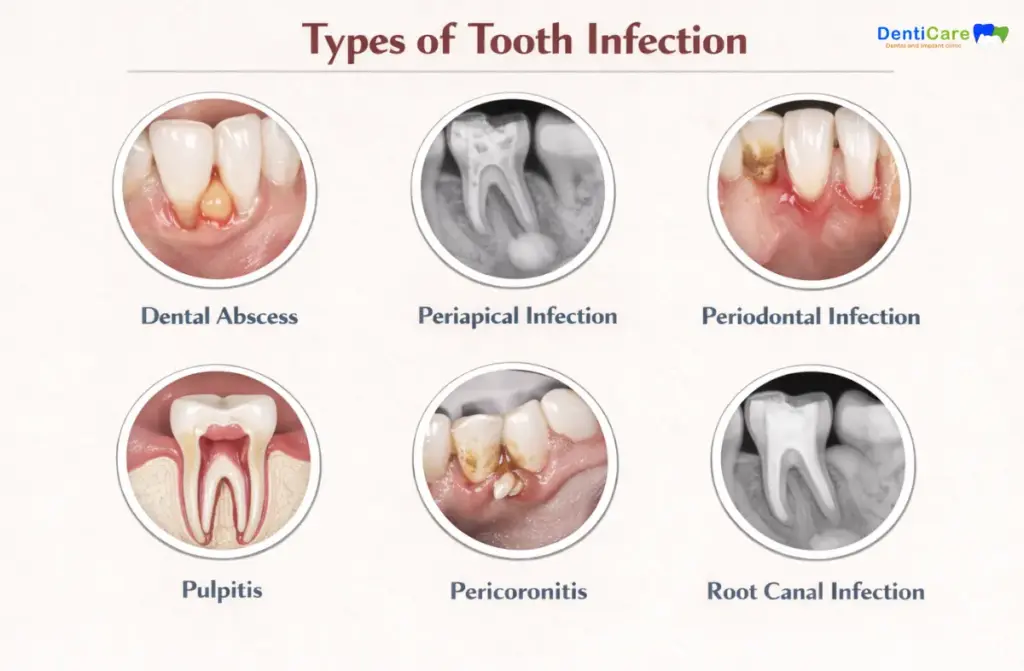
Most oral infections start small: a cavity left untreated, a crack that lets bacteria into the pulp, or gum disease that’s gone unmanaged. Left alone, these can progress from mild irritation to a genuine medical emergency within days. Here’s what to watch for.
Gums That Bleed or Look Swollen
Gums that bleed every time you brush aren’t just a hygiene issue — it’s often a sign that bacteria have colonized below the gumline and are heading toward the root and bone. If this has been going on for weeks, an antibiotic for tooth and gum infection may be needed alongside a deep cleaning to bring it back under control.
Bad Breath That Won’t Go Away
Persistent bad breath, even after brushing and mouthwash, can point to bacteria trapped in pockets beneath the gum tissue. These colonies release toxins that eventually form abscesses. Treating the bacterial load — not just masking the smell — is the actual fix.
A Metallic or Bitter Taste
An odd, lingering taste in your mouth often means pus is already draining from an infected pocket. At this stage, brushing and rinsing won’t help much. This usually calls for medication that can reach inside the abscess itself.
Facial or Jaw Swelling
Visible swelling means the infection has moved past the tooth and into surrounding tissue. This is a genuine urgency signal, and antibiotics for tooth infection at this stage are aimed at stopping bacteria from reaching the bloodstream, not just easing discomfort.
Sharp, Throbbing Pain That Worsens at Night
Nerve involvement is the usual cause of pain that spikes when you’re lying flat. Medication can ease the acute infection, but the nerve itself will still need treatment — typically a root canal — to resolve permanently.
When Are Antibiotics Actually Necessary?
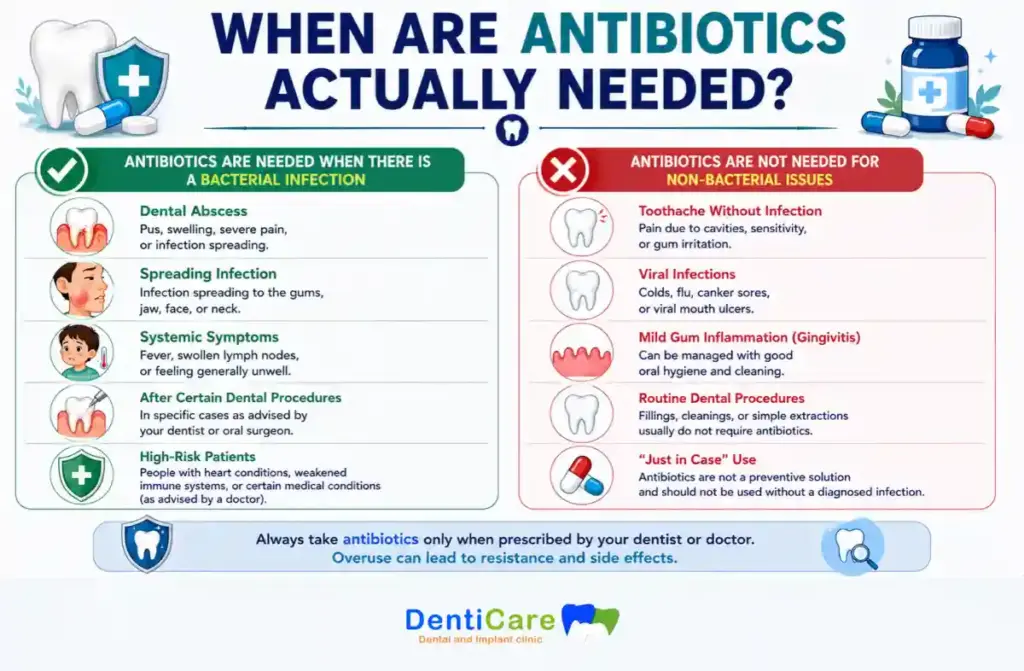
Not every toothache warrants a prescription — in fact, overprescribing is one of the biggest contributors to antibiotic resistance globally. Dentists reserve antibiotics for tooth infection cases where bacteria have spread beyond what a filling or cleaning alone can address. You’re a likely candidate if you notice:
- Swelling that’s spreading to the jaw, cheek, or neck rather than staying confined to one tooth
- Fever or general body weakness, which can signal bacteria entering the bloodstream
- Difficulty opening your mouth or swallowing, suggesting the infection has reached deeper facial tissue
- A compromised immune system — people with diabetes or other conditions that slow healing often need earlier intervention
- Pain or swelling after a recent extraction or root canal, which may point to reinfection rather than normal healing
If you’re experiencing any combination of these, don’t wait for the pain to peak before calling your dentist — see Root Canal Treatment for how deeper infections are typically resolved once the acute phase is controlled.
Which Antibiotics Dentists Actually Prescribe
The right medication depends on the type of bacteria involved, how deep the infection sits, and your medical history. A dentist — not a pharmacist or a Google search — should decide the best antibiotic for tooth infection after an exam and, ideally, an X-ray.
- Amoxicillin (a penicillin) is usually the first choice for mild to moderate infections because it’s effective against the bacteria most commonly found in the mouth and has a well-understood safety profile. As a general-purpose antibiotic for tooth and gum infection, it remains the most widely prescribed option in dental practice.
- Cephalosporins come into play when penicillin isn’t an option — for instance, in patients with a mild penicillin allergy — and work by a different mechanism to break down bacterial cell walls.
- Metronidazole targets anaerobic bacteria that thrive deep inside abscesses where oxygen doesn’t reach. It’s frequently combined with amoxicillin for infections that haven’t responded to a single antibiotic, and this combination is also common among antibiotics for wisdom tooth infection cases where the site is hard to clean.
- Clindamycin is often considered the best antibiotic for tooth infection in patients with a true penicillin allergy, or for infections that have spread into bone, since it penetrates bony tissue more effectively than some alternatives.
Antibiotics for Wisdom Tooth Infection
Wisdom teeth sit at the very back of the jaw, partly or fully covered by gum tissue in many people, which makes them notoriously hard to keep clean. Food and bacteria collect around a partially erupted wisdom tooth, leading to a condition called pericoronitis — inflammation and infection of the gum flap covering the tooth.
Antibiotics for wisdom tooth infection are typically prescribed when there’s visible swelling, pus, or pain that radiates toward the ear or throat. Amoxicillin combined with metronidazole is a common approach here, since the infection often involves both aerobic and anaerobic bacteria trapped under the gum flap.
Importantly, medication only manages the flare-up. Recurrent pericoronitis is one of the most common reasons dentists recommend wisdom tooth removal — antibiotics buy time to reduce swelling before extraction, but they rarely resolve the problem for good on their own.
Dosage and Duration: Why Finishing the Course Matters
As a general guide — and this varies by drug, severity, and patient history:
| Infection severity | Typical course length |
| Mild, localized infection | 5–7 days |
| Moderate to severe infection | 7–10 days |
| Deep or recurring infections (including wisdom tooth cases) | Combination therapy, dentist-directed |
The single biggest mistake patients make is stopping early once the pain fades. Pain relief doesn’t mean the bacteria are gone — it means the population has dropped low enough that inflammation has eased. Stopping at that point lets surviving, often more resistant, bacteria rebound. This is one of the main drivers of antibiotic resistance, a concern flagged repeatedly by health authorities such as the World Health Organization and India’s National Centre for Disease Control.
What to Expect, Timeline-Wise
- First 24–48 hours: Swelling and sharp pain typically start easing — a sign the antibiotic for tooth infection is taking effect, though the underlying infection isn’t resolved yet.
- Days 3–5: Pressure and inflammation continue to drop. This is usually when a dentist will want to see you for the definitive treatment (root canal, drainage, or extraction) rather than relying on medication alone.
- Days 7–10: Most infections have cleared by this point. If pain, swelling, or fever persist beyond this window, that’s a signal to go back to your dentist rather than wait it out — it may mean the antibiotic isn’t matched to the bacteria, or the underlying issue hasn’t been addressed.
Smoking, missed doses, and underlying conditions like uncontrolled diabetes can all slow this timeline down and may require a change in medication.
Is There a “Best” Over-the-Counter Antibiotic for Tooth Infection?
This is one of the most searched questions on this topic, and it’s worth answering directly: there is no genuine over-the-counter antibiotic for a tooth infection. In India, as in most countries, antibiotics are prescription-only medications precisely because inappropriate use drives resistance and can mask a worsening infection. Any product marketed as an “OTC antibiotic” for dental pain is either mislabeled, not a true antibiotic, or being sold illegally without the oversight that keeps dosing safe.
What you can get over the counter are pain and symptom relievers — paracetamol, ibuprofen (if not contraindicated), and topical clove-oil or benzocaine gels — but none of these clear a bacterial infection. They manage discomfort while you arrange to see a dentist, nothing more.
What’s the Easiest Way to Get Antibiotics for a Tooth Infection?
The fastest safe route is usually not a pharmacy counter — it’s a same-day or emergency dental visit, many of which now include teleconsultation options. A dentist can assess your symptoms, sometimes over a video call for an initial triage, and either prescribe medication directly or direct you to urgent in-person care if the infection looks severe.
Walking into a pharmacy and asking for antibiotics without an exam might feel like the easiest way to get antibiotics for a tooth infection, but pharmacists in India are increasingly restricted from dispensing antibiotics without a valid prescription — and doing so without a diagnosis risks masking a worsening infection rather than treating it. If cost or access to a clinic is the barrier, ask your dental provider about teleconsultation or emergency slots before assuming a same-day in-person visit isn’t possible.
Why This Matters Beyond Pain Relief
Antibiotics for tooth infection play a genuinely protective role when caught in time:
- They keep infection from spreading into the jawbone, sinuses, or bloodstream (a rare but serious condition called Ludwig’s angina or sepsis can result from untreated dental infections)
- They reduce swelling and pressure enough to make procedures like root canals or extractions safer and more comfortable
- They protect patients with existing health conditions from complications
- They buy time between the acute infection and the definitive dental procedure
What they don’t do is fix the cavity, crack, or gum disease that caused the infection in the first place. That part still requires an in-person visit.
The Bottom Line
A tooth infection isn’t something to sit on. The right antibiotics for tooth infection can control the bacteria and buy you time, but they work alongside — never instead of — proper dental treatment. If you’re noticing pain, swelling, or a bad taste that isn’t going away, the safest move is to get it looked at before it escalates. Book an appointment with a dentist as early as possible; catching it early is almost always simpler, cheaper, and less painful than waiting.